Fidel Castro Quotes
The solutions put forth by imperialism are the quintessence of simplicity...When they speak of the problems of population and birth, they are in no way moved by concepts related to the interests of the family or of society...Just when science and technology are making incredible advances in all fields, they resort to technology to suppress revolutions and ask the help of science to prevent population growth. In short, the peoples are not to make revolutions, and women are not to give birth. This sums up the philosophy of imperialism.
The population control and views of contraception of Castro, a left wing radical, was ironically that of the most conservative elements of America and some of the organized religions such as Roman Catholics. Data has shown time and time again, that if the average number of children of the average poor family were the same as the number of children in the average non-poor family, most of the poverty in that country of area would be eliminated. This is true within the United States and without.
Fidel Castro, Cuban Premier, 1968
Sourced by: Eigen's Political and Historical Quotations


This is a very valuable historical quotation as it gives is a flavor of 19th century attitudes about birth control. Malthus was one of the first to warn about the danger of overpopulation. But even he repudiated birth control as a potential solution. Toynbee was giving a scholarly academic lecture and academics whenever they discussed birth control were expected by many to speak or write only in Latin—the “dead language.” Toynbee, a very young brilliant man—he died at only 31—was considered very daring as he actually discussed it in English. The assumption of all at the time, in that Protestant culture, was that birth control was immoral. The logic of it was that sex was pleasurable, but as children would likely result, the parents would have and accept responsibility. Pleasure without the concomitant responsibility might lead to sex for pure enjoyment and much time spent with pleasure. The production of children and the responsibility thereof was therefore a break and limitation on the amount of time that people would spend with sex. There was the Protestant work ethic and too much sex would detract from work, prayer, parenting, scholarship, and activities of social responsibility. In America there was a similar cultural view of birth control and even as late as 1963 the criminal law was used to restrict birth control. A Connecticut pharmacist was jailed for filling a doctors prescription for condoms for a married couple where the wife’s life was threatened if she bore another child. The Supreme Court overturned the conviction, but birth control and abortion were conflated. Even today, many of the so called “pro life” organizations not only oppose legal abortion, but they want the government to restrict birth control, though tactically they emphasize the abortion publicly. The English and American family planning advocates like Margaret Sanger were up against these attitudes on which there is stll some controversy into the 21st century.


History has shown that as girls and women get educated and learn about family planning, their children are healthier and have better chances of survival and despite the lower death rate the population trend slows as a result of family planning.

Critics of Roberson observe that he had made much of his $100 million personal fortune evangelizing against abortion and communism, and yet he was willing to tolerate the Chinese government controlling procreation and using abortion as one of the methods. Then it was revealed that Robertson had large investments in China. If the Chinese had not reduced their birth rate, the huge increase in the Chinese standard of living that has been achieved would have been much less. Robertson did think that the abortion policy would hurt the Chinese but he was advising a foreign policy of non-interference.

In Burundi, family land is divided among the male children of a family. The average Burundian woman has 6.3 children, nearly triple the international fertility rate. With this fertility rate, the plots of land for each person inevitably get smaller and smaller over time. At 10,745 square miles, Burundi is slightly smaller than the U.S. state of Maryland, but it holds nearly twice as many people: about 10 million. The small plots of land are inefficient to farm and provide subsistence. So the nation was in a crises as there was little industrialization and land was essential for existence for most Burundians. See {35808} and {35809}.
This was written just before Japan annexed Korea. See {613106}. It is true that Australia with vast land areas at the time was very racist and would only admit whites. America allowed some Asian immigration but limited it severely. After Japan’s defeat in WWII they solved their problem very easily. They practiced birth control and in the early 21st century Japan had a negative population growth. After World War II, there was a huge international emphasis on birth control and family planning as WWII in Asia was in part the result of overpopulation in Japan.


There were few reformers who had such a long, extensive, and activist career in both England and India. She began her career as a minister’s wife but was literally turned out of her house by her husband for whom she was not religiously orthodox enough. This started her religious activism which ended with her as an atheist. She led a match-girl’s strike, founded a Hindu college in India, and was even arrested for pornography in England when she wrote a book advocating birth control. She is on many lists of “Great Indians” along with Gandhi and Nehru. She was Jiddu Krishnamurti’s teacher.
His data was from the last three decades of the 20th century. The larger a country’s population gets, the more economic growth it takes to improve or even maintain the standard of living. If this and land and other resources are in short supply relative to the population, there is more dissatisfaction and the probability of civil conflict increases. See {621892} for a similar view.


At the time most people did not realize that the ability of a nation or land area to support a population was dependent more on agricultural and industrial productivity than on population size. In the most affluent and developed countries, land outside of the cities is quite affordable and available, whereas in poor, underdeveloped nations, land distribution and reform is still a factor. The majority of citizens of many developed, affluent nations do not own any land.

Cost of the pill is only one factor responsible for the difference. Even in situations where birth control pills have been provided for free, there has been a slow acceptance and use rate among the poor and developing women. The other factors are resistance to change of any kind, cultural traditions, women tending to make no decisions without the husband’s OK, religious taboos where the affluent tend to ignore religious strictures when they interfere with desired lifestyle, while the poor tend to be more obedient, and most of all the sad fact that children are a woman’s social safety net in developing countries that do not yet have one built into the body politic.


The demographics to which he referred was the low fertility rate and the large proportion of elderly.


One of the reasons that Jefferson and others were so anxious to expand the territory of the United States was that Britain had operated with the policy that curtailed and limited the population growth of the American colonies and the resentment of this policy led to growth of America and the Westward expansion.

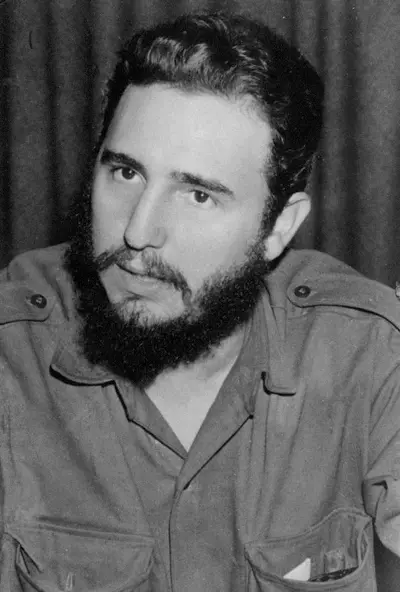
Fidel Alejandro Castro Ruz better known internationally as Fidel Castro, was a Cuban revolutionary and politician who served as Prime Minister of Cuba from 1959 to 1976 and President from 1976 to 2008. Ideologically a Marxist–Leninist and Cuban nationalist, he also served as the First Secretary of the Communist Party of Cuba from 1961 until 2011. Under his administration, Cuba became a one-party communist state; industry and business were nationalized, and state socialist reforms were implemented throughout society.
