Arnold J. Toynbee Quotes
I wish to speak of one more remedy, which Malthus himself repudiated namely, that of artificial checks on the number of children. It has been said that such questions should only be discussed "under the decent veil of a dead language." Reticence on them is necessary to wholesomeness of mind ; but we ought nevertheless to face the problem, for it is a vital one. These preventive checks on births excite our strong moral repugnance. Men may call such repugnance prejudice, but it is perfectly logical, because it is a protest against the gratification of a strong instinct while the duties attaching to it are avoided.
This is a very valuable historical quotation as it gives is a flavor of 19th century attitudes about birth control. Malthus was one of the first to warn about the danger of overpopulation. But even he repudiated birth control as a potential solution. Toynbee was giving a scholarly academic lecture and academics whenever they discussed birth control were expected by many to speak or write only in Latin—the “dead language.” Toynbee, a very young brilliant man—he died at only 31—was considered very daring as he actually discussed it in English. The assumption of all at the time, in that Protestant culture, was that birth control was immoral. The logic of it was that sex was pleasurable, but as children would likely result, the parents would have and accept responsibility. Pleasure without the concomitant responsibility might lead to sex for pure enjoyment and much time spent with pleasure. The production of children and the responsibility thereof was therefore a break and limitation on the amount of time that people would spend with sex. There was the Protestant work ethic and too much sex would detract from work, prayer, parenting, scholarship, and activities of social responsibility. In America there was a similar cultural view of birth control and even as late as 1963 the criminal law was used to restrict birth control. A Connecticut pharmacist was jailed for filling a doctors prescription for condoms for a married couple where the wife’s life was threatened if she bore another child. The Supreme Court overturned the conviction, but birth control and abortion were conflated. Even today, many of the so called “pro life” organizations not only oppose legal abortion, but they want the government to restrict birth control, though tactically they emphasize the abortion publicly. The English and American family planning advocates like Margaret Sanger were up against these attitudes on which there is stll some controversy into the 21st century.
Arnold J. Toynbee, 1852–1883, English Economic Historian, Uncle of Arnold J. Toynbee, the English Historian, Lectures on the Industrial Revolution of the 18th Century in England
Sourced by: Eigen's Political and Historical Quotations

At the time, condoms and other forms of contraceptives were illegal to buy, sell, possess or own. As late as 1963 a Connecticut druggist was sentenced to jail for filling a doctor’s prescription for condoms and selling them to a married couple even thought the woman might die if she again became pregnant. The Supreme Court (Griswald v. Connecticut) established that a woman had a right to control her own reproductive cycle and the government had no business interfering with a privacy right possessed by a couple. Roe v. Wade established the right to an abortion. The same moral compunctions used with abortion were, and still are used by some to oppose any form of artificial birth control. They argued: preventing a life was as serious a moral failure as taking one. Many Catholics, many evangelical and fundamentalist protestants, and some orthodox Muslims are today morally opposed to birth control and believe that the government should ban birth control as it once was in the United States.


In Burundi, family land is divided among the male children of a family. The average Burundian woman has 6.3 children, nearly triple the international fertility rate. With this fertility rate, the plots of land for each person inevitably get smaller and smaller over time. At 10,745 square miles, Burundi is slightly smaller than the U.S. state of Maryland, but it holds nearly twice as many people: about 10 million. The small plots of land are inefficient to farm and provide subsistence. So the nation was in a crises as there was little industrialization and land was essential for existence for most Burundians. See {35808} and {35809}.

History has shown that as girls and women get educated and learn about family planning, their children are healthier and have better chances of survival and despite the lower death rate the population trend slows as a result of family planning.


The population control and views of contraception of Castro, a left wing radical, was ironically that of the most conservative elements of America and some of the organized religions such as Roman Catholics. Data has shown time and time again, that if the average number of children of the average poor family were the same as the number of children in the average non-poor family, most of the poverty in that country of area would be eliminated. This is true within the United States and without.


Cost of the pill is only one factor responsible for the difference. Even in situations where birth control pills have been provided for free, there has been a slow acceptance and use rate among the poor and developing women. The other factors are resistance to change of any kind, cultural traditions, women tending to make no decisions without the husband’s OK, religious taboos where the affluent tend to ignore religious strictures when they interfere with desired lifestyle, while the poor tend to be more obedient, and most of all the sad fact that children are a woman’s social safety net in developing countries that do not yet have one built into the body politic.


Jorge Mario Bergoglio. This quotation was reprinted in religious and secular organs of almost all religions as the message was universal and could apply also to non-Roman Catholic Churches and non-Christian religions. The Pope in this statement did not change church doctrine one bit. It urged a major change in tactics, context, emphasis and style. Extreme fundamentalists within the Roman Catholic church and without, however, saw the statement as a softening of the moral position of the church regarding these controversial areas. Most however welcomed his quotation as long overdue and a stylistic throwback to a different time where people were less educated and less informed by media.


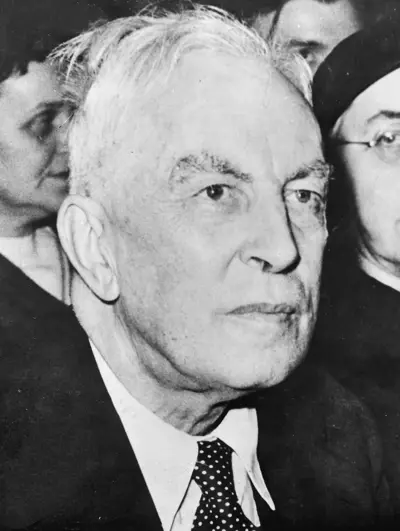
Arnold Joseph Toynbee CH FBA was a British historian, a philosopher of history, an author of numerous books and a research professor of international history at the London School of Economics and King's College London. From 1918 to 1950, Toynbee was considered a leading specialist on international affairs.
