Henry McNeal Turner Quotes
The seeds of freedom ... have now been scattered where despotism and tyranny ranked and ruled, will be watered by the enlivening dews of God's clemency, till the reapers [abolitionists] shall shout the harvest home.
Henry M. Turner, 1834-1915, Minister and Bishop, African Methodist Episcopal Church, Co-Founder, Georgia Republican Party, Vice President, American Colonization Society, Statement about the Emancipation Proclamation, 1863
Sourced by: Eigen's Political and Historical Quotations


This quotation is historically important because Davis clearly states the reason for the rebellion of the South. The anti-slave states were growing at a greater rate than the slave states and despite the greater voting power that a southerner had (a result of the 3/5 count of slaves for census purposes, and the Senate), the handwriting was on the wall and the majority of the United States was against the vicious institution of slavery and would make it unprofitable, impossible and/or illegal in the coming years. Southern slavery advocates saw this as a “tyranny of the majority” and therefore took up arms. In the early 20th century, apologists for the Southern rebellion tried to promote the idea that there were reasons other than slavery, but this quotation and the resolutions of the states who withdrew from the Union make it clear that the right to maintain slavery was the only significant issue. In that sense it was a States’ Rights issue, but the South was opposed to States’ Rights when it came to States refusing to return fugitive slaves when Federal Law required such under the Dred Scott Supreme Court Decision.

The organization sent 2,100 volunteers to fight for South American independence from Spain.


The Czar of Russia was often referred to as “The Autocrat of all the Russians” He was the most entrenched and powerful monarch in the world with absolutely no possibility of his giving up his crown and power. That was the analogy that Lincoln used here to express his pessimistic view that the Southern slave owners would never voluntarily give up their slaves. He was right of course in both cases. Force during and after the Civil War freed the slaves, and the 1917 Russian Revolution ended the Czar’s reign.

He like others were very critical of Democracy and also of tyranny, but they had no positive solution as to what was acceptable.


This is one of the more passionate and colorful descriptions of Conservatives in the political literature. The conservative party were called Orangists as they were supporters of the monarchy of William V, Prince of Orange. As in modern times the conservatives included the upper classes, business people, religious advocates. The political conservatives were passionate, respected established authority, and in general, reactionary. The tended even then to flip-flopping as the conservatives had several factions--business conservatives, religious conservatives, monarchial conservatives, authoritarian conservatives and others. Depending on which faction was most powerful at the time, conservatives might advocate one position and change later when another faction was in control. Valckenaer also had some choice words to reflect his disdain for them. It is noteworthy that this description could describe political conservatives in almost any time period, in any culture. For example, it might have been a liberal writing about the Tea Party Republicans in 2014.
The revolutionists were disorganized and unfocused after the Coup that brought them to power. This speech provided some focus for a while. Early in his career, as a Journalist working in Leiden, Holland, he was very active and helpful to the Dutch Patriots and Revolutionaries in their takeover of the government. He helped draft the New Dutch Constitution and participated in most of the new governments conventions.


The country had been completely polarized by 1854. It was only a matter of time for something like the Civil War to break out. The impossibility of compromise was not just held by radicals like Garrison but after the Compromise of 1850 fell apart, most politicians on both sides s

This was part of his presentation to Northern influential business men showing them what he claimed was the New South. He was particularly complimentary about the negro Christian viewpoint that inhibited revenge or retaliation for their terrible treatment. The favorable lines about Negroes were well received by Northerners. However, they were mostly unaware of his racist views he expressed when in the South. See Quotation 643649.


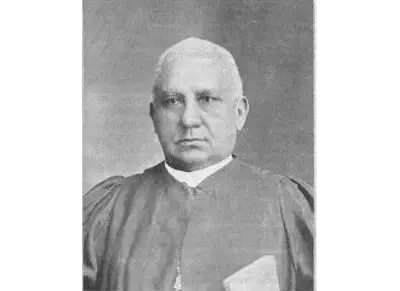
Henry McNeal Turner was an African-American minister, politician, and the 12th elected and consecrated bishop of the African Methodist Episcopal Church (AME). After the American Civil War, he was a pioneer in Georgia in planting new A.M.E. congregations among African Americans there. Born free in South Carolina, Turner learned to read and write and became a Methodist preacher. He joined the AME Church in St. Louis, Missouri, in 1858, where he became a minister. Founded by free blacks in Philadelphia, Pennsylvania in the early 19th century, the A.M.E. Church was the first independent black denomination in the United States. Later Turner had pastorates in Baltimore, Maryland, and Washington, DC.
