Matthew Simpson Quotes
Nor was it only from the millions of slaves that chains had been removed; the whole nation had been in bondage; free speech had been suppressed.
Simpson, Matthew. Funeral Address Delivered at the Burial of President Lincoln, at Springfield, Illinois, May 4, 1865. Carlton & Porter, 1865.


Arguing for the abolition of taxes on newspapers: 1st Baron Lytton of Knebworth


Ingersoll was considered to be the greatest orator and political thinker of his day, but his overt atheistic views curtailed his elected political career.

In 1848 a pro-slavery mob in Washington DC Gamaliel Bailey's anti-slavery publication, The National Era, which soon thereafter was the publisher of the serialized Uncle Tom's Cabin. Hale introduced a bill in the Senate outlawing rioting in the District of Columbia. The Southern Senators objected violently and this served as a catalyst for the for the most extensive public debate that had ever been held on the slavery issue. Hale probably intended this. He was the first public anti-slavery Senator.


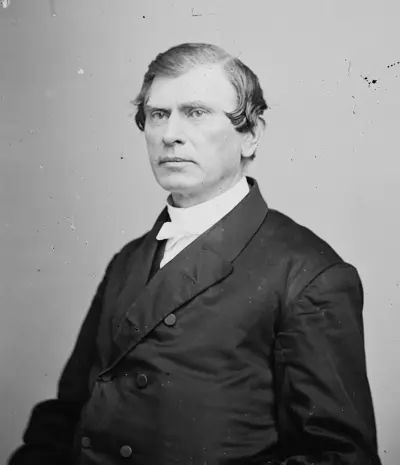
Matthew Simpson was an American bishop of the Methodist Episcopal Church, elected in 1852 and based mostly in Chicago [Correction: Philadelphia. Simpson and his wife were fixtures of Society Hill]. During the Reconstruction Era after the Civil War, most evangelical denominations in the North, especially the Methodists, were initially strong supporters of radical policies that favored the Freedmen (former slaves) and distrusted the Southern whites. However by the late 1860s in border state conferences, the MEC North moved well away from their work with the Freedmen's Bureau and often sided with the grievances of Southern white members. Bishop Simpson played a leading role in mobilizing the Northern Methodists for the cause. His biographer calls him the "High Priest of the Radical Republicans."
