Ludwig Quidde Quotes
The security of which we speak is to be attained by the development of international law through an international organization based on the principles of law and justice.
Quidde, Ludwig. "Security and Disarmament." 12 Dec. 1927, Oslo, Norway. Nobel Lectures, Peace 1926-1950, edited by Frederick W. Haberman, Elsevier Publishing Company, 1972.

The speech was the 50th Anniversary of the Speech that Secretary of State Byrne had given there exactly 50 years ago. It was referred to as the “Speech of Hope” and announced the Marshall Plan.


See {638095} for more information on the Jubilee.


This was a very important statement for the President to make. At the time there was a very conservative right wing that was advocating withdrawing from the UN or at the very least not paying such a large share of the UN funds for operation.


One major problem at the time was that the Soviet Union was supporting and instigating revolutions in many parts of the world. When most nations of the UN wanted to provide peace keeping troops to quell the conflict, the Russians would veto and block the effort, Vandenberg wanted the UN to change the rules regarding the veto. The original right of veto for the major nations was originally included at the insistence of the United States and many Americans did not want to give it up or have any exceptions lest there be more. The Russians at that time also did not want to give up any of their veto powers. Another method that Vandenberg wanted to solve the Russian peacekeeping blockage problem was for America to engage in more collective security pacts so that action could be taken without UN Security Council unanimity by going around the UN.


When he made this statement, the United States was the only nation that had the atomic bomb, but he and other leading nuclear scientists realized that it would not be long before the Russians would also have nuclear weapons, and other countries would so follow suit. He and some others saw a world government as the best way to cope with the nuclear proliferation problems. However, there was too much diversity of values and political ideology in the world to be accommodated in a single government, and the United Nations was the only thing that was practical and that was far from a government and had virtually no sovereignty. However, during the Cold War, Russia and the United States agreed on a Nuclear Proliferation Treaty and most nations of the world, agreed, so that for the issue of nuclear proliferation, the world had a type or world government—an international treaty. However, India and Pakistan did not adhere to it and developed nuclear weapons and North Korea was never a signatory. Other countries like Iran began to evade the treaty and since there was no real world government it was difficult to enforce the treaty throughout the world.

Son of John Jay. Father of Harriet Beecher Stowe and Henry Ward Beecher


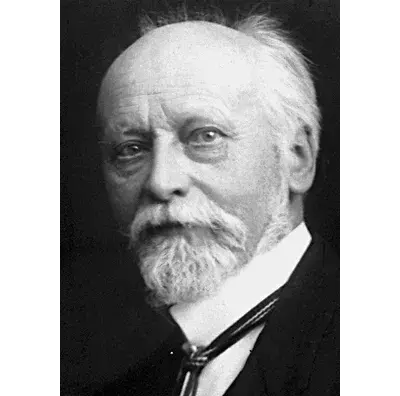
Born into a wealthy bourgeois merchant family, Quidde grew up in Bremen, read history and also got involved in the activities of the German Peace Society (Deutsche Friedensgesellschaft). In his younger years he had already opposed Bismarck's policies. In 1881 he received his PhD at the University of Göttingen. In 1894 Quidde published a 17-page pamphlet entitled Caligula. Eine Studie über römischen Caesarenwahnsinn (Caligula: A Study of Imperial Insanity). Containing 79 footnotes, the short essay is exclusively about the Roman Empire of the 1st century AD. However, Quidde drew an implicit parallel between the Roman Emperor Caligula and Wilhelm II, de facto accusing both rulers of megalomania. The author had insisted on publishing his pamphlet under his real name, which effectively ended his academic career as a historian when, in some periodical, a short review explained the parallels which otherwise might have gone unnoticed. After he made a derogatory comment on a new medal in honour of William I, German Emperor, German Emperor from 1871 to 1888, he was criminally convicted of lèse majesté, and sentenced to three months in prison, which he served in Stadelheim Prison.
