William O. Douglas Quotes
World federation is an ideal that will not die. More and more people are coming to realize that peace must be more than an interlude if we are to survive; that peace is a produce of law and order; that law is essential if the force of arms is not to rule the world.
Douglas, William O. An Almanac of Liberty. Doubleday, 1954.


3rd Earl Russell of Kingston. The military weak nations agreed with him, but the militarily strong ones did not—especially America and England which had the Atomic Bomb when others did not.


Clark, a conservative, was one of those who did not believe that the United Nations or any international organization have any enforcement powers but should just be a forum for deliberation. By the end of the 20th century one of the major conservative complaints about the United Nations was that it could not enforce its resolutions and was a paper tiger.

The speech was the 50th Anniversary of the Speech that Secretary of State Byrne had given there exactly 50 years ago. It was referred to as the “Speech of Hope” and announced the Marshall Plan.


One major problem at the time was that the Soviet Union was supporting and instigating revolutions in many parts of the world. When most nations of the UN wanted to provide peace keeping troops to quell the conflict, the Russians would veto and block the effort, Vandenberg wanted the UN to change the rules regarding the veto. The original right of veto for the major nations was originally included at the insistence of the United States and many Americans did not want to give it up or have any exceptions lest there be more. The Russians at that time also did not want to give up any of their veto powers. Another method that Vandenberg wanted to solve the Russian peacekeeping blockage problem was for America to engage in more collective security pacts so that action could be taken without UN Security Council unanimity by going around the UN.

Actually it was the United States which insisted in the veto which required consensus of the great powers of the time. It was Russia which ended up using it far more often than any other nation.


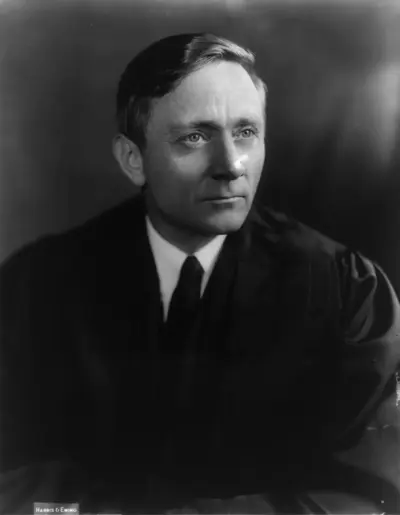
William Orville Douglas was an American jurist and politician who served as an associate justice of the Supreme Court of the United States. Nominated by President Franklin D. Roosevelt, Douglas was confirmed at the age of 40, one of the youngest justices appointed to the court. His term, lasting 36 years and 211 days (1939–75), is the longest in the history of the Supreme Court. In 1975, Time magazine called Douglas "the most doctrinaire and committed civil libertarian ever to sit on the court."
