Alexander Campbell Quotes
The Roman Catholic religion ... is essentially anti-American, being opposed to the genius of all free institutions, and positively subversive to them, opposing the general knowledge among the whole community, so essential to liberty and the permanency of good government.
Alexander Campbell, 1788-1866, Cleric & Founder, Disciples of Christ, Debate Against Catholic Bishop J. P. Purcell, Cincinnati, 1837
Sourced by: Eigen's Political and Historical Quotations


This book is endorsed by major religious organizations of all faiths as well as National School Boards Association, National Education Association, National PTA, National Association of Secondary School Principals, National Association of Elementary School Principals, American Association of School Administrators and others. It is used as a guideline by most schools systems in the United States.


These words are inscribed on the West Front of the state's Capitol in Providence


It took only 10 days after the First Continental Congress met for religious bigotry to arise. After hundreds of years of Catholic/Protestant strife, each sect looked upon the other, not only as theologically wrong, but dangerous to the liberty of the other. Unfortunately, the organied religions had acted so badly towards other religions, that everyone was justified in fearing the other religions. This quotation illustrates a then typical attitude of many American Protestants that the Catholic Church was a threat to national security. Ironically, in modern times, anti-Catholic bigots use this quotation to demonstrate that the United States was founded as a Christian Protestant nation—not a general Christian nation. A small, vicious anti-Catholic sentiment still exists, usually by a minority of right wing Protestant religious fundamentalists. Protestant England had just repealed the laws making Catholicism illegal, but this was regarded at that time as intolerable for the new America. This was one of the disputes which that the Founding Fathers were faced with later and one of the reasons that they were so absolute in the need for the 1st Amendment.

Kennedy was being hurt be fears that as a Catholic, he would be beholden to the Pope and the Catholic Bishops. There were many protestants who believed that the Catholic Church was antithetical to democracy and some who even believed that Catholicism was the religion of Satan. Kennedy decided to confront the issue head on.

This was the second liberal constitution in the world following on the heels of United States Constitution upon which some of this constitution is based. See {585394}. This particular clause is noteworthy for its internal contradiction regarding freedom of religion. After making it illegal to convert any Catholic to any other religion, the constitution goes on to establish freedom of religion. So one was guaranteed the right to practice one’s own religion but if the religion advocated evangelizing and converting others, that part of religious freedom was banned when targeting Roman Catholics.


Newspaper of the Association

It is an error to say that. It is an error to say that He was the last Pope to hold temporal power. Years later, the Vatican rejected this view and adopted the modern concept of freedom of conscience. See {612714}.


Ironically, without the word “wicked” most people would regard the first sentence as a good description of elements of a modern democracy. It illustrates that for the Islamic fundamentalist democracy substitutes the rule of man for the rule of God, freedom of speech allows heresy and blasphemy to to uttered and communicated, and religion which is supposed to inform and direct politics. So what is good for the lover of democracy is the very thing that is bad for Islam. This is not a uniquely Islamic viewpoint. It has been and is held by fundamentalist Christians and Jews as well who would return to Biblical law punishing blasphemy and heresy with death and have religion drive all politics.

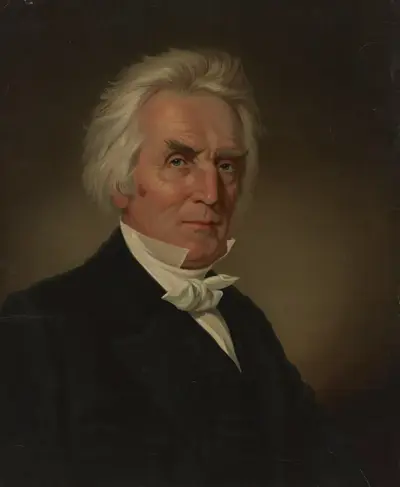
Alexander Campbell was a Scots-Irish immigrant who became an ordained minister in the United States and joined his father Thomas Campbell as a leader of a reform effort that is historically known as the Restoration Movement, and by some as the "Stone-Campbell Movement." It resulted in the development of non-denominational Christian churches, which stressed reliance on scripture and few essentials.:111 Campbell was influenced by similar efforts in Scotland, in particular, by James and Robert Haldane, who emphasized their interpretation of Christianity as found in the New Testament. In 1832, the group of reformers led by the Campbells merged with a similar movement that began under the leadership of Barton W. Stone in Kentucky.:112 Their congregations identified as Disciples of Christ or Christian churches.
