Victoria Woodhull Quotes
The rights of children as individuals begin while yet they remain the fetus.
First female presidential candidate & first divorcee to run for that office. This quotation is quite remarkable for several reasons. Woodhull was far ahead of not only her time but the other feminists and suffragettes at the time in demanding equal right for all women in all thinks including free love. She was generally viewed as an amoral radical. Yet on this critical issue, the was an opponent of abortion and one of the first people to ever claim that a fetus had rights.
While most people at the time opposed abortion, it was based on religious doctrine. Woodhull based her opposition on an equal rights argument—perhaps the first American to do so. Note, that like other feminist leaders of the time, she opposed abortion. However, between the economic pressures and the illegality of birth control devices and information provision, abortion was a critical decision that had to be faced by many women. Later, feminist leadership had to come to grips with the issue of who makes the decision in these areas, and placed the right of the woman to make these decisions, as opposed to husbands, fathers and government, as the highest priority. Then, when the drivers for abortion could not be eliminated, it was women who were criminalized. Feminists then fought for the right of abortion and the right of the woman to make decisions, but feminine leadership has never—in America—been advocates of abortion as opposed to the right of abortion, a subtlety that often is lost.
Victoria Woodhull, 1838-1927, First Financier & Female Stock Broker, Suffragette Leader, Publisher, Equal Rights Party Candidate for President of the United States, Woodhull & Clafin's Weekly, December 24, 1870
Sourced by: Eigen's Political and Historical Quotations

One of the major motivations for abortion at that time in both England and the United States is the terrible stigma which a child born out of wedlock faced together with the mother. When the stigma of so called “illegitimate children” began to diminish, one of the causes of abortion weakened. Note, that like other feminist leaders of the time, she opposed abortion. However, between the economic pressures and the illegality of birth control devices and information provision, abortion was a critical decision that had to be faced by many women. Later, feminist leadership had to come to grips with the issue of who makes the decision in these areas, and placed the right of the woman to make these decisions, as opposed to husbands, fathers and government, as the highest priority. Then, when the drivers for abortion could not be eliminated, it was women who were criminalized. Feminists then fought for the right of abortion and the right of the woman to make decisions, but feminine leadership has never—in America—been advocates of abortion as opposed to the right of abortion, a subtlety that often is lost.


This is very surprising to most modern observers. If a pregnant woman died, there were in some cases those in the family who were just as happy that she passed away before the child was born as the laws of inheritance and succession were dependent on which children lived. The father might be away, and someone would not want a new or another heir, might just bury the pregnant woman. The Romans actually had some very sophisticated medical skills. Julius Caesar, for example, was born via what we today call a “Ceasarean Section.” If a pregnant woman was close term, and she dies, the Romans had the skill to do a C Section on the dead woman and could sometimes save the baby. That ancient Romans considered the fetus as a potential life, is sometimes used by anti abortion forces. However, if they do their research, they would find that Roman law allowed abortions. The decision however had to be the mother’s and the father’s. What this law did is to preserve the possibility of the fetus’s being born alive with surgery when the mother was dead and the father might not be near.


Churches are political organizations too and are subject to the forces of their membership. In the case of the Southern Baptist Convention in 1971 they passed resolutions to assure the right of a woman to have an abortion to protect her health. The position on abortion changed steadily thereafter to even pass Constitutional amendments to ban abortions except to save the life of the mother. See {614356},54122, {614358}, {614359}, {614360}, {614361} for the dynamic history of the change.


If a state or community legally decides that a fetus is a person, there are many situations where there is a conflict of interest between the mother to be and the fetus. A pregnant woman, having a single drink of alcohol, potentially dangers the fetus (called Fetal Alcohol Syndrome). Smoking is clearly hazardous to the health of the fetus (underweight babies and more infant mortality and even more SIDS deaths. A diet to keep a mother thinner may not be nutritious for the fetus, A few states and local government have started prosecuting pregnant women for their personal behavior that might be detrimental to the fetus—often the purpose is to assert the right of the state to regulate the behavior of the pregnant woman so that the state can control abortion.


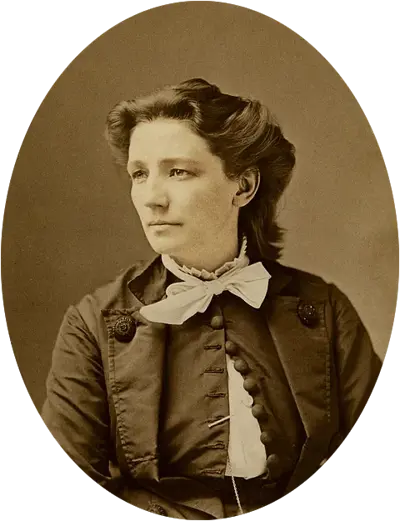
Victoria Claflin Woodhull, later Victoria Woodhull Martin, was an American leader of the women's suffrage movement who ran for President of the United States in the 1872 election. While many historians and authors agree that Woodhull was the first woman to run for the presidency, some disagree with classifying it as a true candidacy because she was younger than the constitutionally mandated age of 35 (Woodhull's 35th birthday was in September 1873, seven months after the March inauguration). However, election coverage by contemporary newspapers does not suggest age was a significant issue; this may, however, be due to the fact that few took the candidacy seriously.
