Richard Furman Quotes
...the right of holding slaves is clearly established in the Holy Scriptures, both by precept and example... Had the holding of slaves been a moral evil, it cannot be supposed that the inspired Apostles ... would have tolerated it for a moment in the Christian Church. In proving this subject justifiable by Scriptural authority [Luke 12:47], its morality is also proved; for the Divine Law never sanctions immoral actions.
Furman, Richard. Rev. Dr. Richard Furman's Exposition of the Views of the Baptists, Relative to the Coloured Population of the United States, in a Communication to the Governor of South-Carolina. A. E. Miller, 1823, pp. 7-14.


The defense of slavery in this Instruction is not a defense of the racial slavery that was prevalent in the South prior to the Civil War, but rather a philosophical defense of a just conception of slavery. Even so the Pope’s justification of the buying and selling of slaves flew in the face of a papal document issued by Gregory XVI twenty-seven years earlier {611428}. “Just titles” of slavery were approved by the Catholic Church in circumstances in which the person was deprived of their liberty justly. Specific examples in the past included slaves captured in war, persons condemned to slavery for a crime, and those who sold themselves into slavery. Even though the Vatican was defending “just titles” of slavery, this teaching has been seen as regressive and highly contradictory to true Catholicism. After this Instruction the distinction between just and unjust slavery in Catholic teaching would erode and twenty-one years later Pope Leo XIII {611844} would condemn slavery and openly support abolition throughout the world.

Religious establishments by and large supported early American slavery. Quakers and some of the Northern established churches opposed slavery, and in the 1850’s Protestant opinion began to turn against slavery with the exception of the Southern Baptists. The Catholics—themselves the objects of major discrimination—chose not to alienate themselves moreso, supported slavery but not with great fervor. Rev. Furman is the man for whom Furman University is named.


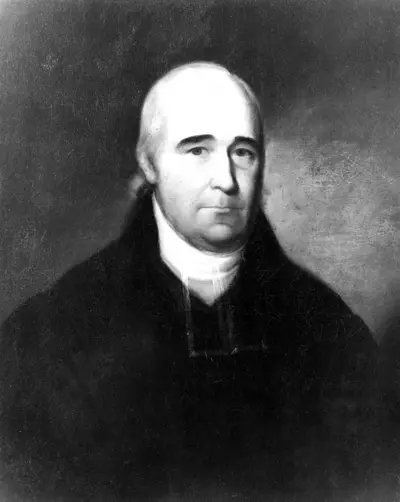
Richard Furman was a Baptist leader from Charleston, South Carolina, United States. He was elected in 1814 as the first president of the Triennial Convention, the first nationwide Baptist association. Later he was the first president of the South Carolina State Baptist Convention.
