Louis-Ferdinand Celine Quotes
The rich don't have to kill to eat. They employ people, as they call it. The rich don't do evil themselves. They pay. People do all they can to please them, and everybody's happy.
Céline, Louis-Ferdinand. Journey to the End of the Night. Translated by Ralph Manheim, New Directions Publishing, 1983, p. 327.


Opposing the concept of a national or central bank:


Salisbury was a brilliant, effective prime minister, but he was a snob and not a democrat. See {639131}.


The majority had held that the income tax or any tax based on income or wealth was unconstitutional (it was less than 2% only on income over $4,000--$101,000 in 2010 dollars). It took a Constitutional Amendment to have an income tax. See {587718}.


Labor unions as we know them did not then exist. Calhoun and many others saw the struggle as a inherent class struggle, not unlike that particular view of Karl Marx. See {606584} for one his more extreme views on the subject.

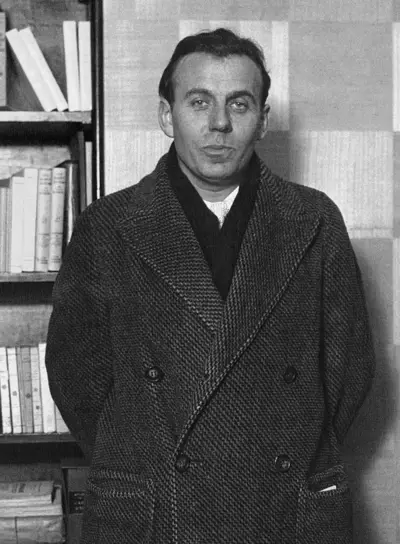
Louis-Ferdinand Céline (/seɪˈliːn/ say-LEEN, French: [selin] (listen)) was the pen name of Louis Ferdinand Auguste Destouches, a French novelist, polemicist and physician. His first novel Journey to the End of the Night (1932) won the Prix Renaudot but divided critics due to the author's pessimistic depiction of the human condition and his writing style based on working class speech. In subsequent novels such as Death on the Installment Plan (1936), Guignol's Band (1944) and Castle to Castle (1957) Céline further developed an innovative and distinctive literary style. Maurice Nadeau wrote: "What Joyce did for the English language…what the surrealists attempted to do for the French language, Céline achieved effortlessly and on a vast scale."
