Herman Gorter Quotes
The revolution in Russia was terrible for the proletariat in the long years of its development and it is terrible now, after the victory. But at the actual time of revolution it was easy, and this was due to the peasants.
Gorter, Herman. Open Letter to Comrade Lenin. Wildcat, 1989.

Although he was a Marxist, he was also a democrat. He was one of the first leftists to criticize the Russian Revolution. The letter was widely published. There were few left wing intellectuals who would take Lenin on at the time but Gorter was one.


Saloth Sar Pol Pot. His view was that any small merchant or tradesman running a business was a capitalist, and all educated were enemies of the people. He moved entire populations out of the cities into the countryside where they would live as peasants or be murdered as about 20% of the entire population as. Therefore, in his warped view, the capitalists could no longer “control” Cambodia.

This is a very important historical, political quotation. The conservatives have since the Russian Revolution conflated socialism and communism. However, here in 1932 the leader of the American Socialist Party had already described the Communist Revolution in Russia as a failure of founding an acceptable modern state. Nonetheless, even into the 21st century many conservatives describe Thomas as a Communist. See {626692} for his distinction between Communism and Socialism. The difficulty of modern nation building was explained by Thomas and others but was really not accepted until the many attempts of the early 21st century, some supported by America like Iraq and Afghanistan and the Balkans and others like the “Arab Spring.” Then his early wisdom on this point became more appreciated.

In 1927 there was a Peasant Uprising in the Hunan Province of China. Young Mau went there and wrote a report. Corruption has plagued China for millennia. As can be seen by this quotation, Mao thought that a “people’s revolution” would end corruption and despite capital punishment for corruption under the Communist government, corruption still thrived. By the 21st century corruption was common among local Communist Party Officials despite national party and government attempts to obliterate it.

In 1927 there was a Peasant Uprising in the Hunan Province of China. Young Mau went there and wrote a report. Mao and other young communist leaders had a much more acute appreciation of sloganeering than their older revolutionary comrades. Even into the 3rd millennium, the same “Down with Imperialism” slogan could be heard in many part of the world, long after the Soviet Union collapsed and China and become capitalistic.

Referring to the newly imposed income tax:

And as the leader of the exploited, after his revolution he became a dictator himself, albeit a very popular one amongst most Cubans.


There had been a Chinese Revolution in 1911, but although there were changes at the seat of government and in urban areas, the rural areas where most of the people lived changed little if at all. The revolution failed as a result of it became a revolution without reform.

Vladimir Lenin. The two American leftists had been deported from America. Lenin and the Russian leadership was delighted to have these two famous radicals, and they thought they would find Russia wonderful. But soon the Americans discovered that the freedoms that they found so critical did not, and would not, exist in Communist Russia. After two years, they left Russia for Canada and Europe where they wrote and castigated Communist Russia to the delight of their old American enemies and the shock of many of their old American friends. Lenin was glad to be rid of them. They were as much of a threat to his regime as they were to the United States of the time.
Louis Napoleon had seized control of France and had very little popular support amongst the aristocracy and middle class. However, the Socialists leading the uprisings frightened them more than Louis Napoleon as the Socialists had the support of the peasants who resented the abuses of the aristocracy and many of the middle class. This was true class warfare and not at all what was possible in the United States when American conservatives would claim “class warfare” when there was a move for more progressive taxation. In Europe, class warfare really meant death and destruction, so for many who knew the history, the claim of “class warfare” was frightening and a large part of the “Red Scare” in the United States.


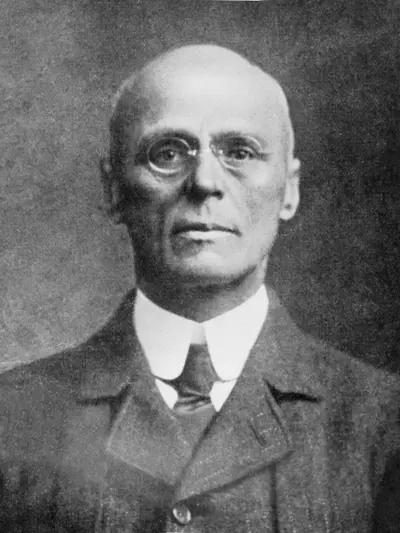
Herman Gorter was a Dutch poet and socialist. He was a leading member of the Tachtigers, a highly influential group of Dutch writers who worked together in Amsterdam in the 1880s, centered on De Nieuwe Gids (The New Guide).
