Ante Trumbic Quotes
The representatives of the Serbs, Croats, and Slovenes declare a new and most categorically that our people constitutes but one nation, and that it is one in blood, one by the spoken and written language, by the continuity and unity of the territory in which it lives, and finally in virtue of the common and vital interests of its national existence and the general development of its moral and material life. The idea of its national unity has never suffered extinction, although all the intellectual forces of its enemy were directed against its unification, its liberty, and its national existence
for the Unification of Yugoslavia
Ante Trumbic, 1864-1938, Croatian Legislator, President of the Yugoslav Committee Minister for Foreign Affairs of Yugoslavia, Pact of Corfu, July,1917, [This pact was the establishment of the state of Yugoslavia. Although these leaders agreed that they should have a common country, there has always been dissention among the different people. Strong man Tito was able to hold Yugoslavia together, but after his death everything started falling apart, and separate states were again created—except Serbia and Montenegro stayed in the same state. Any hope for unity that there might have been was shattered during WWII where the Croats were not only on the Nazi side, but actually rounded up many Serbs and put them into concentration camps.
Sourced by: Eigen's Political and Historical Quotations

This has been a classic dilemma for all large multi ethnic states—trying to develop a sense of unity of citizenship in the face of populations who think of themselves foremost differently. Attempts like this of banning the names of the peoples from official use, banning languages, changing people’s names, requiring common dress and other such methods have failed in most cases (Ataturk’s Turkey being the notable exception). America, Great Britain and the Soviet Union showed the world that it was possible to have a strong sense of national unity and at the same time allow peoples, cultures, and ethnicities to maintain their own ethnic identities. However, many modern governments see their situation as so unique that ethnic repression of one kind or another is required. Modern China, in particular, while not as extreme as Sun Yat-Sen still makes it very difficult for certain cultures to thrive such as the Tibetans. Note that even in the United States we have many who argue that non English language usage should be discouraged and disapprove of the concept of hyphenated Americans. For example, see Theodore Roosevelt {631377}.


He persuaded many other rulers to join the Indian Union when India became Independent.
This mode of national definition is characteristic of many nations of Europe as well.


He was able to obtain some allies, and sent his younger brother, Edward, to conquer Ireland and crown himself King of Ireland. He was not popular with many Irish however and totally resisted by the English. He was killed there at Dundalk, See {639441}.


At the partition if India into Hindu and Muslim States, what is now Bangladesh, was a part of Pakistan called “East Pakistan” by the Pakistani government. While India became a thriving democracy, Pakistan with its combination of military strongmen and Islamic Fundamentalists did not fare as well and became a very corrupt, undemocratic military nation. East Pakistan was not contiguous with the rest of Pakistan and was culturally quite different and less religiously fundamentalist. While all Pakistanis suffered from poor government, the East Pakistanis fared worse. Finally, they developed their own identity which was suppressed by the military dictators of Pakistan and the Banglas revolted and Bangladesh became and independent nation.


See {641733} for some background on the problem.


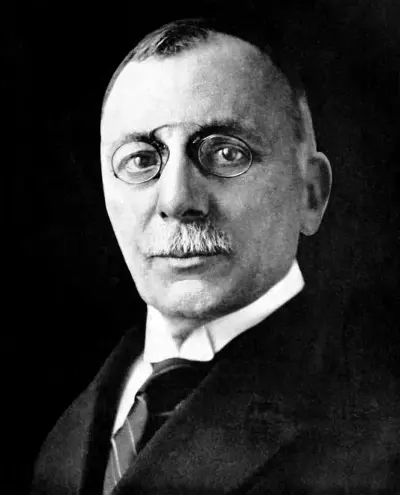
Ante Trumbić was a Yugoslav and Croatian lawyer and politician in the early 20th century.
