Thomas Sowell Quotes
The reason so many problems do not get solved in Washington is that solving those problems is not the No. 1 priority: Re-election is.
Sowell, Thomas. "Random Thoughts." Townhall, 9 Sep. 2014.


This was one of the most remarkable statements made by a Congressional leader. At the time, the Congress was in the midst of one of the worst stalemates in American Political History. The national debt limit had to be raised in order to legally pay for the expenses that the Congress had voted for and the President had approved. A minority of the House—the Tea Party--tried to use the necessary legislation to get a program of theirs legislated when they did not have the votes to pass it in both houses of Congress. The House would not approve any solution that the Senate would pass, and the Senate would not pass any of the House proposals. The Boenner and the President had reached a compromise but the minority of his own party refused to go along and threatened to oust the Speaker and not vote for the Compromise. To them, compromise was surrender and doing business as usual. At the same time, the left wing of the President’s party did not want to vote for the Compromise plan that the President and the Speaker had worked out. Then the Minority Leader of the Senate, create a new plan that would transcend solve the immediate problem and defer the larger issues which would continue to be debated. The Senate Majority Leader agreed to go along with it and so did the President, but the Minority Leader’s fellow Republicans in the House refused to vote for that compromise. The President and then Boenner went on national television sequentially to explain the situation and the Speaker made this famous quotation, Boenner, we caught in an impossible situation. His Tea Party faction insisted that there need not be a stalemate. The President and the Senate needed the debt limit raised and they would have to give in and vote for the Tea Party plan. Almost all of the Tea Party members were new to Congress and Bonner realized that an entire party who controlled the Senate would never be blackmailed that way, and even if they did, the President would Veto. Yet his own deputy was preferred by the Tea Party and some others, so if Boenner tried to act statesman like, he was risking his speakership. So he became the spokesperson of the Tea Party wing and denied what 90 percent of all Americans knew to be true. Usually absurd statements clearly contrary to the facts at the time are the results of mistakes or gaffs. Occasionally, a more complex situation explains it.

When Disraeli first entered politics and tried to run for Parliament the notion that he would ever become Prime Minister was very unrealistic to everyone except Disraeli. In addition to no political experience at the time, he came from a Jewish background at a time when anti-Semitism was very common and acceptable to England. Even if he were not inexperienced and Jewish, he was not part of the British aristocracy and was not socially connected. He also had no large business and industrial connections and no important family connections. However, he was a marvelous writer and speaker, a very fast learner, and turned out to be a political natural. Most historians rate him as one of the two or three greatest British Prime Ministers.


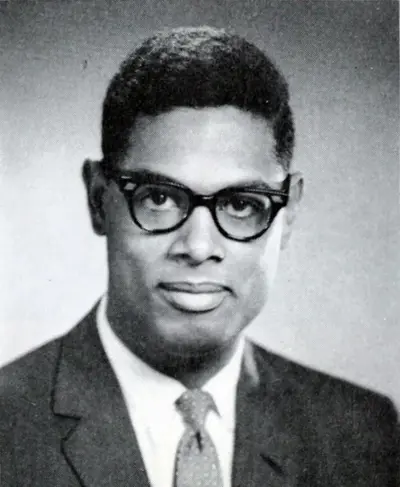
Thomas Sowell is an American economist, social theorist, and senior fellow at Stanford University's Hoover Institution.
