David Brooks Quotes
It’s tough for Washington to pass complicated legislation.
David Brooks, Political Journalist & Columnist, PBS Evening News, June 1, 2007
Sourced by: Eigen's Political and Historical Quotations

In the early years of the Obama Administration, the minority leader of the Senate declared that the object of the Republicans in the Senate was to prevent Obama from being reelected. Therefore, the Republicans used the filibuster to block virtually all legislation. In 2010, the Republicans gained control of the House of Representatives and would not pass any legislation that the President favored lest he get credit for accomplishing something. It had gotten so bad, that even when the President proposed Republican ideas about which everyone agreed, that too was blocked.


In 2007 the Republicans, who were in the minority, began to use the filibuster to a degree that it had never been used. Within the single year of 2007 Republican’s filibustered 62 times, doubling the highest rate that had occurred before. A small minority of senators were able to block legislation that easily passed the House and was supported by the majority of senators and in some cases supported by the overwhelming majority of the American Public.


This was one of the worst Congresses in American History and had the worst productivity record—passing very few bills, and none of any significance. The anti-government, Tea Party hyper-conservative Wing of the Republican Party intimidated the Speaker of the House and they were opposed to any compromise at all on anything.


See Henry Clay for an earlier expression of this point.


This was one of the most remarkable statements made by a Congressional leader. At the time, the Congress was in the midst of one of the worst stalemates in American Political History. The national debt limit had to be raised in order to legally pay for the expenses that the Congress had voted for and the President had approved. A minority of the House—the Tea Party--tried to use the necessary legislation to get a program of theirs legislated when they did not have the votes to pass it in both houses of Congress. The House would not approve any solution that the Senate would pass, and the Senate would not pass any of the House proposals. The Boenner and the President had reached a compromise but the minority of his own party refused to go along and threatened to oust the Speaker and not vote for the Compromise. To them, compromise was surrender and doing business as usual. At the same time, the left wing of the President’s party did not want to vote for the Compromise plan that the President and the Speaker had worked out. Then the Minority Leader of the Senate, create a new plan that would transcend solve the immediate problem and defer the larger issues which would continue to be debated. The Senate Majority Leader agreed to go along with it and so did the President, but the Minority Leader’s fellow Republicans in the House refused to vote for that compromise. The President and then Boenner went on national television sequentially to explain the situation and the Speaker made this famous quotation, Boenner, we caught in an impossible situation. His Tea Party faction insisted that there need not be a stalemate. The President and the Senate needed the debt limit raised and they would have to give in and vote for the Tea Party plan. Almost all of the Tea Party members were new to Congress and Bonner realized that an entire party who controlled the Senate would never be blackmailed that way, and even if they did, the President would Veto. Yet his own deputy was preferred by the Tea Party and some others, so if Boenner tried to act statesman like, he was risking his speakership. So he became the spokesperson of the Tea Party wing and denied what 90 percent of all Americans knew to be true. Usually absurd statements clearly contrary to the facts at the time are the results of mistakes or gaffs. Occasionally, a more complex situation explains it.


The objective of a large proportion of the Congress then was not to improve the nation or even pass legislation, but to preserve their ideology and attack and weaken the other party. Compromise for example is probably the best legislative practice, but that Congress had a substantial number of Tea Party and other ultra conservatives who believed that any compromise at all was an immoral abandonment of principle.

In the beginning of the 21st century political hyper-polarization made Congressional gridlock the norm. Anything that was acceptable to the Democrats would be rejected by the Republicans and vica versa. However, at times, the public would be impassioned by events and demand Congressional action. A movement for gun control after a serious of massacres with assault weapons in 2012 was the example that Thomas was using. If the legislative process could be stretched out until public passions waned, the normal gridlo{78528}k would control and there would be no reform.


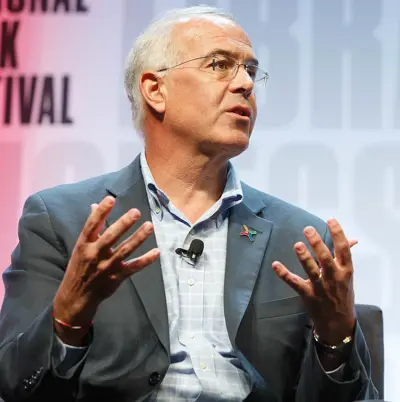
David Brooks is a conservative political and cultural commentator who writes for The New York Times. He has worked as a film critic for The Washington Times, a reporter and later op-ed editor for The Wall Street Journal, a senior editor at The Weekly Standard from its inception, a contributing editor at Newsweek, and The Atlantic Monthly, and a commentator on NPR and the PBS NewsHour.
