William Henry Vanderbilt Quotes
The railroads are not run for the benefit of the 'dear public' — that cry is all nonsense — they are built by men who invest their money and expect to get a fair percentage on the same
His father Cornelius, one of the great, creative industrialists of America, was not at all of the same mindset and saw corporations and the Railroads as having an important role in America with substantial obligations to the society which enabled the economic development and supported the railroads. He described his son as a “blockhead”. William goes down in American history as the arrogant industrialist and capitalist whose wealth was produced by his talent of being born to the right father who built the great empire.
William Henry Vanderbilt, 1821–1885, Railroad Owner & Executive, Heir of the Great Industrialist Cornelius Vanderbilt, Quoted in Clarence P. Dresser, "Vanderbilt in the West", New York Times, October 9. 1882
Sourced by: Eigen's Political and Historical Quotations


His father Cornelius, one of the great, creative industrialists of America, was not at all of the same mindset and saw corporations and the Railroads as having an important role in America with substantial obligations to the society which enabled the economic development and supported the railroads. He described his son as a “blockhead”. William goes down in American history as the arrogant industrialist and capitalist whose wealth was produced by his talent of being born to the right father who built the great empire.


The implication of the investment in infrastructure and education is that the state must tax people at a rate that would pay for it. But if the rate is too high, he argues, people will not make a sufficient profit from their work.


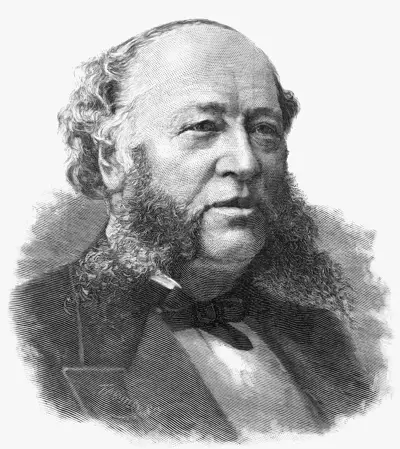
William Henry "Billy" Vanderbilt was an American businessman and philanthropist. He was the eldest son of Commodore Cornelius Vanderbilt, an heir to his fortune and a prominent member of the Vanderbilt family. Vanderbilt became the richest American after he took over his father's fortune in 1877 until his own death in 1885, passing on a substantial part of the fortune to his wife and children, particularly to his sons Cornelius II and William. He inherited nearly $100 million from his father. The fortune had doubled when he died less than nine years later.
