Mustafa Akyol Quotes
The Qur'an not only lacks any earthly punishment for someone who abandons Islam, it even includes verses that imply that such a change of heart should be a matter of free choice.
Akyol, Mustafa. Islam Without Extremes: A Muslim Case for Liberty. W. W. Norton & Company, 2011, p. 278.


Quintus Septimius Florens Tertullianus

Abdul Rahman, Afghan citizen, had converted from Islam to Christianity 16 years before. Conversion from Islam is a capital crime under Sharia Law which was the law of Afghanistan even after the Taliban had been overthrown. He was jailed and threatened with death. Statements like this and others made directly to the government persuaded the Afghan politicians to go against their mullahs who demanded the death penalty as is proscribed by Islamic Law—Sharia. The judges tried to get Rahman to recant and he would not (see {589518}). So they finally decided that he must be mentally insane and therefore could not be tried, and the problem was solved that way.


Spinoza’s ideas were considered so radical and dangerous that he was the only man in history who was excommunicated by the Catholics, the Jews and the Muslims.

The modernity of this ancient leader is striking. For another example see his view on the importance of engendering supportive public opinion: XXX
The Jews, Christians and Zoroastrians were allowed to maintain their own religion and live as 2nd class citizens and pay a special tax, but ALL other religions were to be forced to convert.

This was a remarkable public statement for its time. No other political leader of an Islamic country would dare claim that people have a right to be atheists. Very few would even suggest that people should be free to choose their own religion.


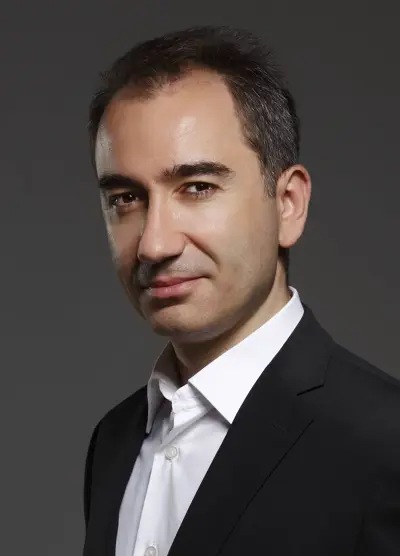
Mustafa Akyol is a Turkish writer and journalist. He is the author of Islam without Extremes: A Muslim Case for Liberty, long-listed in 2012 for the Lionel Gelber Prize, a literary award for the world's best non-fiction book in English. He became a contributing opinion writer for the International New York Times in 2013. He is mainly famous in the western world for his arguments that Islam is highly compatible with classical liberalism and Enlightenment values, and that Islamic practice and the governance of Muslim-majority countries should be reformed along those lines similar to what previously happened in Christian-majority Europe.
