Robert Blatchford Quotes
The question of Socialism is the most important and imperative question of the age. It will divide, is now dividing, society into two camps. In which camp will you elect to stand? On the one side there are individualism and competition - leading to a 'great trade' and great miseries. On the other side is justice, without which can come no good, from which can come no evil. On the one hand, are ranged all the sages, all the saints, all the martyrs, all the noble manhood and pure womanhood of the world; on the other hand, are the tyrant, the robber, the man-slayer, the libertine, the usurer, the slave-driver, the drunkard, and the sweater. Choose your party, then, my friend, and let us get to the fighting.
This book became the basic English textbook on socialism. Astoundingly, it sold over 2 million copies at a time when books other than the Bible ever sold in that quantity. The fact that it was so popular alarmed many of the more conservative politicians of the day. A “sweater” was an owner or a manager of a “sweat shop”—a high pressure factory with poor and unsafe working conditions where every once of productivity is “sweated” out of the workers.
Robert Blatchford, 1851-1943, Journalist & Editor of The Clarion (A Socialist Newspaper), Merrie England, 1894
Sourced by: Eigen's Political and Historical Quotations

Fitzhugh was a Southern iconoclast whose view of Northern labor was much like that of Karl Marx but who was an enthusiastic supporter of slavery.


He was advocating a middle ground between corporate and wealthy individuals’ control of the government which then to a great extent existed and the Communist idea of the dictatorship of the proletariat.


One of the contradictions of capitalism is that at many points in history capitalism has caused and/or contributed to great death and suffering. However, that same capitalism has led to the development of science, technology, agronomy, medicine and education which has saved and preserved millions of lives and raised the standard of living more than anything else.


Although English, Cobett spent time in America and published a newspaper, The Porcupine Gazette, in Philadelphia. We was very conservative but on the issue of slavery his resembled a liberal point of view. He never used sugar, coffee, or rum because slave labor produced them. However, he advocated legally enslaving lazy people, blacks and whites, who would not work.


Socialism in its then pure form had the state owning and controlling all the major assets of the nation. In this sense it was contradictory to individual freedom and hence democracy. However, in the years after Tocqueville’s quotation and the industrial revolution, socialism has gradually moved away from state ownership and operations of all institutions and resources. Democracy has tended to adopt a more regulatory view to control the excesses of unbridled capitalism. The range of democratic nations by the 21st century encompassed differences but some were described as “social democracies” and had some state ownership but were basically capitalistic economies. Even the self-described Communist nations had become heavily capitalistic albeit with less political freedom. At the same time, even the United States—the epitome of 21st century capitalism, owned and controlled a few of the resources and means of production and tended to regulate the others—a substantial difference from the American democracy which Tocqueville studied.


3rd Earl Russell of Kingston. He favored and argued for a middle ground of a capitalistic socialism or a socialized capitalism, which is what most democracies became.

He was a strong foe of both Communism and Capitalism. He was one of the first critics to describe the de facto inequality of Communism.


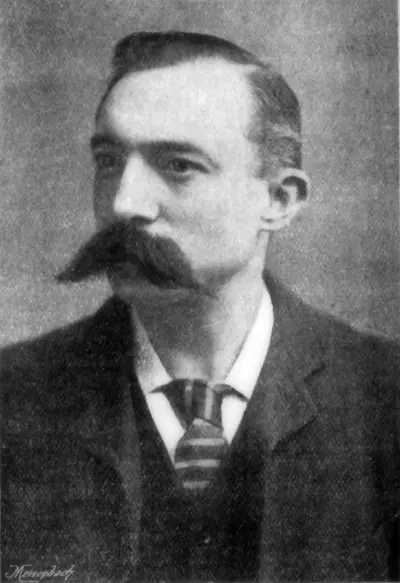
Robert Peel Glanville Blatchford was an English socialist campaigner, journalist, and author in the United Kingdom. He was also noted as a prominent atheist, nationalist and opponent of eugenics. In the early 1920s, after the death of his wife, he turned towards spiritualism.
