Yukio Mishima Quotes
The purest evil that human efforts could attain, in other words, was probably achieved by those men who made their wills the same and who made their eyes see the world in the same way, men who went against the pattern of life's diversity, men whose spirits shattered the natural wall of the individual body, making nothing of this barrier, set up to guard against mutual corrosion, men whose spirit accomplished what flesh could never accomplish.
Mishima, Yukio. Runaway Horses. Translated by Michael Gallagher, Knopf, 1973, p. 101.


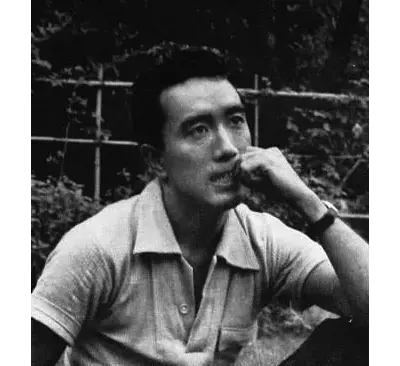
Yukio Mishima, born Kimitake Hiraoka (平岡 公威, Hiraoka Kimitake) was a Japanese author, poet, playwright, actor, model, Shintoist, nationalist, and founder of the Tatenokai (楯の会, "Shield Society"), an unarmed civilian militia. Mishima is considered one of the most important Japanese authors of the 20th century. He was considered for the Nobel Prize in Literature in 1968, but the award went to his countryman and benefactor Yasunari Kawabata. His works include the novels Confessions of a Mask (仮面の告白, Kamen no kokuhaku) and The Temple of the Golden Pavilion (金閣寺, Kinkaku-ji), and the autobiographical essay "Sun and Steel" (太陽と鉄, Taiyō to tetsu). Mishima's work is characterized by "its luxurious vocabulary and decadent metaphors, its fusion of traditional Japanese and modern Western literary styles, and its obsessive assertions of the unity of beauty, eroticism and death".
