Mary Ritter Beard Quotes
the 'public' - a term often used in America to indicate the great metropolitan newspapers.
Beard, Mary Ritter. A Short History of the American Labor Movement. Harcourt, Brace and Howe, 1920, p. 8.

Dunne put these words in the mouth of his famous character, Mr. Dooley. The part of the quotation, “comforts th' afflicted, afflicts th' comfortable” without the accent, became the motto for many journalists. This is the earliest use we have found, but it ironically was not very complimentary to newspapers.


Samuel Langhorne Clemens, 1835-1910


Grant had ordered Sherman to start a diversionary attack and then pull back. They both knew that the newspapers would describe Sherman’s efforts as a failure, and Grant was apologetic that Sherman would get some bad press.

The New York Tribune in 1856 had a circulation of 220,000—many of whom were Westerners


The three "estates" were the Lords Spiritual (Clergy), Lords Temporal (Aristocracy) and the Commons. The other three estates have been forgotten, but the press is still known as the "fourth estate." See Emanuel Sieyes, s.v. "Voters and Voting," on the Third Estate

See Robert Rubin for a later variant: {614135}
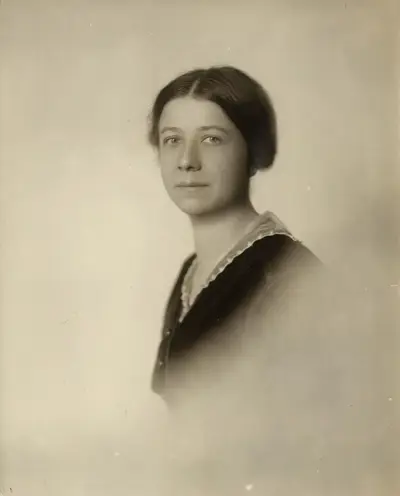
Mary Ritter Beard was an American historian, author, women's suffrage activist, and women's history archivist who was also a lifelong advocate of social justice. As a Progressive Era reformer, Beard was active in both the labor and women's rights movements. She also authored several books on women's role in history including On Understanding Women (1931), America Through Women's Eyes (editor, 1933), and Woman as Force in History: A Study in Traditions and Realities (1946), her major work. In addition, she collaborated with her husband, historian Charles Austin Beard, as coauthor of seven textbooks, most notably The Rise of American Civilization (1927), two volumes, and America in Midpassage: A Study of the Idea of Civilization (1939) and The American Spirit (1942), the third and fourth volume of The Rise of American Civilization series. A standalone book, Basic History of the United States, was their best-selling work.
