Hoshyar Zebari Quotes
The problem was to get judges who were not afraid to prosecute Saddam despite intimidation and threats.
Zebari, Hoshyar. Interview by Wolf Blitzer. Late Edition with Wolf Blitzer, CNN, 23 Oct. 2005.

This shameful quotation was shocking to most readers. It is subject to two interpretations: One that judges who did not rule on Constitutional issues the way conservative extremists wanted would come to physical harm. The other, that conservatives should pressure judges by withholding appropriations for the courts, impeachments and recall elections where they exist, as well as funding potential opponents for those jurisdictions where judges are elected. Both meanings were disgraceful in the view of most Americans. Later, DeLay was convicted and sentenced to jail for money laundering and illegally spending and raising campaign funds. He was also reprimanded by the House Ethics Committee for unethical methods of fund raising for other earlier actions.

The strongman president, barred from a 3rd 5 year term by the Burundi Constitution, came up with an absurd argument as to why the limit should not apply to him. When the Supreme Court would not go along with the scheme, he threatened them and finally they all reversed their previous opinion and voted to allow it—all except for Nimpagaritse who did not sign the reversal, but was no longer safe. Although the President tried to arrest him, he escaped over the border and went inti exile.
The government of Pakistan regarded this as seditious. The Government can fire judges at will and the military has the right to convene its own courts and try Pakistani civilians for certain alleged crimes by removing their cases from the civilian courts. Even when a Pakistani judge is not intimidated by the government or the military, the Islamic extremist fanatics often assassinate any public official who any one of thousands of fanatics feels is anti-Islamic.
In many nations, there is little judicial independence from the government. Judicial decisions that thwart government sometimes produce retaliation ranging from reducing the pay or staff of judges, threatened investigations and impeachment even arrest and execution---sometimes by government ‘death squads’. Even in the United States, the beginning of the 21st century, was fraught with so many examples of judicial intimidation threats, that two Supreme Court justices began speaking throughout the country to educate the public to this problem. In general, the more democratic and free a nation is, the more frequently the courts will disallow activities of the executive and even the legislature.


This is the most formalized and sophisticated compendium of laws of the so-called “barbaric peoples” of Europe. The compilation was in many ways a documentation of the traditional laws of the Visigoths that had evolved over hundreds of years.
The notion that President Theodore Roosevelt could be terrorized was absurd on its face. He faced down everyone; one of the reasons he was so popular. But Van Cleave and his organization was paranoid about organized labor. It is they who were terrorized. Van Cleave was rabidly opposed to any anti-trust government “interference” with business and he was also virulently opposed to labor unions. See {638612}, {638615}, {638614}, and {638613}.
He had been reporting from Egypt at the time. There was no judicial independence, and the judges were generally corrupt and incompetent. The system operated as a tradeoff. The government would not investigate and punish the corruption and bribery in the private cases if the judges would always rule for the government in the cases they brought. The system was particularly pernicious in that Egypt did not depend on the jury of peers system so the judges had great power in judicial proceedings.


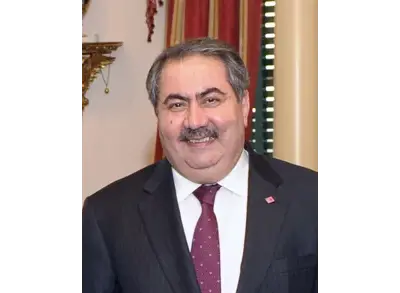
Hoshyar Mahmud Mohammed Zebari, also simply known as Hoshyar Zebari (also spelled Hoshyar Zubari/Zibari, Kurdish: Hişyar Zêbarî; born 1953) is an Iraqi politician who formerly served as the Deputy Prime Minister of Iraq in 2014 and also as the Minister of Finance until 2016. He was Minister of Foreign Affairs from 2003 until 2014.
