William Maclay Quotes
The President sends first and asks our advice and consent afterwards.
President George Washington dispatched David Humphreys on a secret mission to establish a diplomatic mission in Lisbon. To maintain the secrecy, he did not ask the Senate to confirm the appointment in advance.
William Maclay, 1737-1804, U. S. Senator (Democrat, PA), Journal
Sourced by: Eigen's Political and Historical Quotations


The President had authorized the NSA to spy Americans who might have been suspected of being themselves or being in contact with terrorists without obtaining permission of a court including the Foreign Intelligence Surveillance Act (FISA) special court that had been established for these cases. Instead the administration argues that it was inherent in the powers of the Presidency in time of war.


Alberto Gonzalez, White House Counsel and later Attorney General who was forced to resign and David S. Addington, Counsel to the Vice President, had come up with a novel view of the powers of the presidency. They argued that since the President is the Commander in Chief, in a war situation or intelligence gathering thereto, has the Constitutional responsibility for that function, he need not obey any laws of Congress as in the conduct of the war Congress would be impinging on the Constitutional separation of powers which itself was prohibited by the Constitution. The argument did not find any significant legal support but for a while the George W. Bush White House behaved as if this were the law, despite the fact that even in the American Revolution and the War of 1812 Congress passed laws regulating the conduct of the armed forces as is provided for in other parts of the Constitution. Yet even Goldsmith would allow the President some powers that many think are unconstitutional and/or belong to Congress. See {32436}.


President George W. Bush had ordered NSA agents to bug the phones and email of American citizens who might have been talking with an overseas party or e-mailing them out of the country. The administration thought that American citizens might be part of terrorist sleeper cells or unwittingly were aiding terrorists. The law prohibited such activity—where American citizens were involved—without getting a court order. However, the President claimed that he had the inherent power as commander in chief of exempting the court requirement. Others maintained that even the President is not above the law. What was the big puzzle was that there was a secret court Congress had established just for such cases, but the administration instead decided to bypass the court.


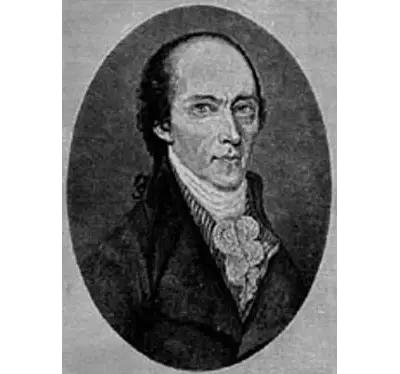
William Maclay was a politician from Pennsylvania during the eighteenth century. Maclay, along with Robert Morris, was a member of Pennsylvania's first two-member delegation to the United States Senate. Following his tenure in the Senate, he served in the Pennsylvania House of Representatives on two occasions, as a county judge, and as a presidential elector. He is known for his journal providing historical information on the 1st United States Congress.
