Wilfred Burchett Quotes
The police chief of Hiroshima welcomed me eagerly as the first Allied correspondent to reach the city.
Burchett, Wilfred. Shadows of Hiroshima. Verso, 1983.


After the Hiroshima bomb there was still no surrender by the Japanese. The decision was made to drop the second bomb on Nagasaki.

Referring to the use of the atomic bomb in World War II:


The note was found in an abandoned Japanese camp on Bataan. There are some who believe that this note was a forgery. However, most think it genuine as it reflected one of the Japanese
“aces in the hole” to defend against an allied invasion of the Japanese mainland. It was one of the reasons that some American planners advocated use of the Atomic Bomb. Of course that was a real risk of using the bomb. The Japanese might be so angry and feel morally abused and kill the many allied prisoners they had. Many thought it was a lesser risk because it did not have the symbolic animus that foreigners occupying the Japanese homeland had. The quotation illustrates the amazing complexity that the American and allied leadership faced trying to end WWII in the Pacific.


This was the order for the dropping of the first Atomic bomb on Hiroshima.

When the American troops invaded Okinawa, the individual Japanese soldiers and civilians would not surrender, even when completely surrounded and out numbered. Surrender was culturally dishonorable and the Japanese had been told by their leadership that if they did surrender the Americans would kill them anyway. Almost all the Japanese died and the United States forces had an astoundingly high casualty rate—37%. Truman was fearful that there might be hundreds of thousands American casualties in the subduing of the Japanese mainland. The atomic bomb solved that problem.


Although generally a right wing conservative, Clark today sounds like almost like an extreme leftist on the issue. At the time however, many thought that he had taken leave of his senses. He not only was completely contrary to bipartisan national policy but opposed by almost universal American public opinion. He is one of the very few significant American officials to oppose the war policies.

On March 9-10, 1945, over three hundred B-29 Superfortresses, loaded with 2,000 tons of incendiary bombs flew over Tokyo bombing the city in waves for 6 hours. Over 250,000 buildings were destroyed and more people killed than would be in either Hiroshima or Nagasaki which were destroyed by atomic bombs. The fact that the Japanese would not surrender even after such complete destruction of their capital and largest industrial city, was used by American leaders in assessing whether to use the atomic bomb afterwards. There were many who believed that the atomic bomb would not be enough for motivate a Japanese surrender as Japanese culture prohibited surrender. Indeed, even after the 1st atomoc bomb, the Japanese did not surrender, and after the 2nd, the war council was split 3-3 and the Emperor historically broke the tie. Even the atomic bomb might not have worked. Later generations found this resistance to surrender hard to understand but Japanese culture was amazingly strong then.

This was one of several petitions that were sent to the President by groups of scientists who were working on the development of the atomic bomb. The major objective of the scientists was to demonstrate the power of the bomb before it was used. The President did not select this policy of demonstration as the invasion of the Japanese mainland was imminent and America only had two bombs—one a uranium and the other, plutonium. If the demonstration would not produce the unconditional surrender, then there would only be one weapon left and it would take months to produce another. This was the strongest argument against using up a bomb. It was somewhat borne out when the Japanese did not surrender after the first bomb had been dropped on Hiroshima. It took the second.


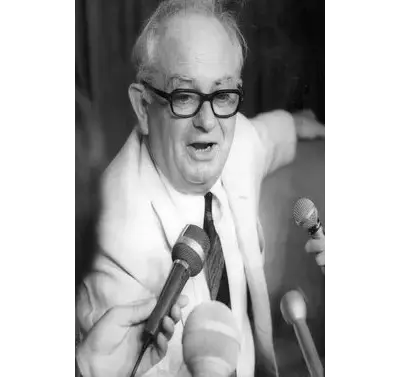
Wilfred Graham Burchett was an Australian journalist known for being the first western journalist to report from Hiroshima after the dropping of the atomic bomb, and for his reporting from "the other side" during the wars in Korea and Vietnam.
