Ali Oumlil Quotes
The philosopher never counted he was never invited to play the role of d’ai—propagandist for reform ideas. That role went to the fuqaha, the religious authorities..
He was referring to the period of the military and strongman takeovers of the Arab countries in the 2nd half of the 20th century. Intellectuals were never allowed to play any significant role.
Ali Oumil, Moroccan Ambassador to Egypt, Islam et etet National, 1985
Sourced by: Eigen's Political and Historical Quotations


He was one of the few Christians who were then aware of and commented upon the new Reform Judaism—a new Americanized form of Judaism that was then developing. America and its separation of church and state had become a fertile environment for the creation and development of new religions (Mormons, Christian Scientists) and new offshoots of existing religions (Pentecostals, Reform Jews). The Reform Judaism, which many orthodox Jews do not even consider it a legitimate form of Judaism, became, in less than a century the most popular form of Judaism for American Jews.


Despite the fact that the statues were holy symbols to Buddhists, they were offensive to Muslims who say statues as “graven images” prohibited by the Koran. See Wakil Ahmad Muttawakil {608419} and Jamal’s other quotation {604665}.


Joseph ben Matthias. The term was coined by Josephus to refer to the fundamentalist, orthodox Jewish view of a proper state, as opposed to a secular government. The Jewish fundamentalist dream of a theocracy came down through modern times. There were ultra-orthodox Jewish groups who opposed the creation of the State of Israel on the grounds that it is not a theocracy and there are some who still want to see Israel transformed. The term became generalized and is applied to any state where the religion is the state and religious leaders dominate and control the state. The ultra orthodox Muslims, as in Iran, are generally the only religious group who have created theocracies or semi-theocracies as Islamic states. See {638106} for the context in which the term was first used.


The Pope separates the church from the civil law to a degree that is a rarity amongst religions. Even Catholic Pope John Paul II who prohibited priests from holding political office always saw Papal and clerical influence on civil law making and interpretation as a fundamentally important role.
The king was making his judgment that the English whites did not have the “gut” to kill the number of people and perpetuate the other cruelties to forcibly convert Black Africans to Christianity, and even if they did, it would be inconsistent with the moral tenets of the religion. He was not familiar with the Reformation persecutions of previous generations, nor did he anticipate the effect of colonialism by which large parts of Africa were culturally and religiously converted.


This statement is eerily similar to the statements of some of the Islamic fanatic fundamentalists 80 years later.


In 1877 Wasburn was dropped from the List of Ministers by the Unitarian Church. He had become very critical of organized and orthodox religion of all kinds.


In modern times this would appear to be a most reasonable approach to quality and doctrinal control within a church. But keep in mind that these were to be promulgated by Catholic Kings and become the civil law of the land as well as the religious. So the Catholic Bishops were granted control of who could preach in any church in the Bishopric. The power of the state was there to back up the Bishops with criminal laws and law enforcement. This together with the Inquisition would counter the forces of Reformation—Protestants.
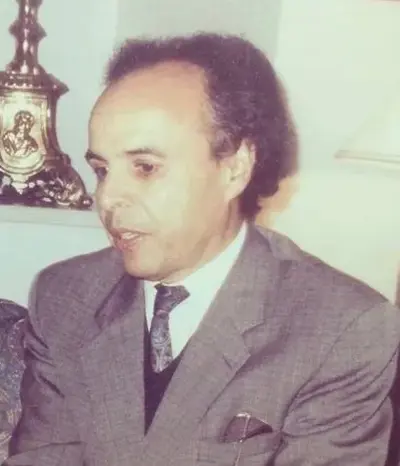
Ali Oumlil is a Moroccan philosopher, thinker, human rights activist, diplomat and political persona.
