Christopher Gist Quotes
The People in this Town began to inquire my Business, and because I did not readily inform them, they began to suspect me, and said, that I was come to settle the Indian's Land and they knew I should never go Home again Safe.
Gist, Christopher. Christopher Gist's Journals with Historical, Geographical and Ethnological Notes and Biographies of His Contemporaries. Edited by William M. Darlington, J. R. Weldin & Co., 1893, p. 34.


Brant had an English style Missionary education and was an Anglican, belonging to the Church of England. During the American Revolution, he persuaded most of the Iroquois tribes to fight for the British against the revolutionary colonists. However, the Oneida tribe was not persuaded and joined the rebel side. A few New England Presbyterian missionaries had targeted the Oneida people, and when that tribe chose the “wrong” side, Brant believed that the reason was their different religious point of view. After the Revolution, Brant and his Iroquois followers were driven out of their American lands and escaped to Canada, while the Oneida were given complete title to their lands by George Washington.


The Turks had massacred the vast majority of their Armenian population, and treated the Greeks badly killing and them many of them from territories the Ottoman Turks had conquered. Jews fared better but were 2nd class citizens. Bristol was the American State Department’s senior official and was very “understanding” of the murders and ethnic cleansing despite the fact that President Wilson and most American politicians were very opposed to the Turkish massacres. See {620614} and {620599} . Two factors makes this quotation very significant. First, at the time the State Department was not really under the control of either the President or the Congress. It was not rare for the Department to have its own policies and implement them. This began to change in WWII and FDR exercised much more control than previous presidents since Theodore Roosevelt. The second factor is that there were many racists throughout the State Department—Bristol was only one. There was little concern for minorities’ welfare and the emphasis was on commerce. See {620600} Even in Truman’s administration, the President had massive opposition from the State Department for his policy of recognizing the State of Israel. Today, this kind of racism in the State Department is very rare, and human rights has been one of their major concerns. There were many changes in 75 years.


Lastman was going to Kenya to promote Canada’s bid for the 2008 Olympics. He had been asked if he would visit Mombassa. Lastman was a very strong advocate for a pluralistic Toronto and Canada and had wide support amongst ethnic minorities. This statement surprised many and he was widely criticized. He later explained that he had been suffering from symptoms of hepatitis which clouded his judgment.


The Barbary Pirates had an incredible extortion racket going in the Mediterranean. If nations would pay them an annual sum each year, they would not attack and seize merchant ships of that country and sell the ships and goods while holding the sailors for ransom.

Wallace was a white, Jewish journalist who was interviewing African American Minister Louis Farrakhan , leader of the Black Muslims on 60 Minutes. Farrakhan's view about whites, his anti-Semitism and animosity toward journalists were on the record and not disguised. This opening of the interview caught Minister Farrakhan by surprise and even with his animosity, he could not help breaking out in a large grin at Wallace's audacity.


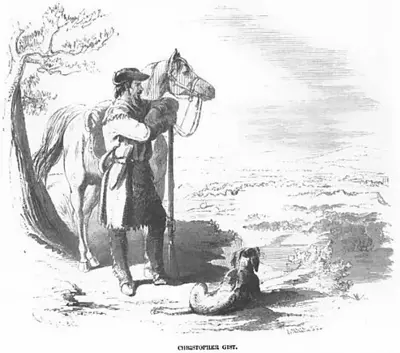
Christopher Gist (1706–1759) was a explorer, surveyor and frontiersman active in Colonial America. He was one of the first white explorers of the Ohio Country (the present-day states of Ohio, eastern Indiana, western Pennsylvania, and northwestern West Virginia). Gist is credited with providing the first detailed description of the Ohio Country to colonists in the Thirteen Colonies. At the outbreak of the French and Indian War, Gist accompanied Colonel George Washington on missions into this wilderness and saved Washington's life on two occasions.
