James Weldon Johnson Quotes
The peculiar fascination which the South held over my imagination and my limited capital decided me in favor of Atlanta University; so about the last of September I bade farewell to the friends and scenes of my boyhood and boarded a train for the South.
Johnson, James Weldon. The Autobiography of an Ex-Colored Man. Sherman, French & Company, 1912.


This quotation from one of America’s great historians illustrates the cultural divide that existed between the North and South just prior to the Civil War. While it was true that the quality of education in the South was far inferior to that of the North (a disparity that would take almost 150 years to dissipate), there was a snobbishness and social intolerance that existed and persisted into the 21st Millennium. It was virtually impossible to debate the slavery issue between Northerners and Southerners as the two did not even recognize the same kind of logic and analytic methods.

This quotation shows two important historical facts about Southern Racism. The first is now great the social pressures were against any white who would try and alter the status quo. The second was that none the less there have always been whites in the South who, despite the great social penalties, did the right thing and not only improved the situation, but more important, made most Americans realize that Southerners were not all racists any more than all of any group had any negative behavior.


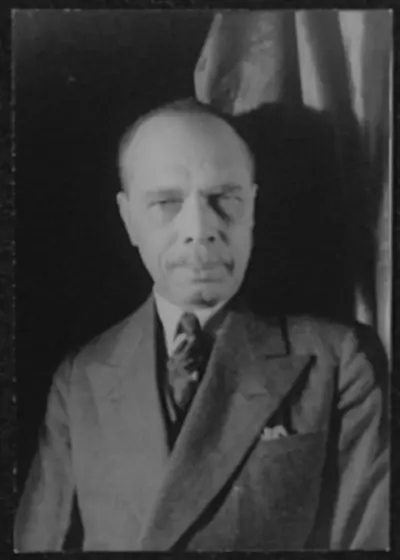
James Weldon Johnson was an American writer and civil rights activist. He was married to civil rights activist Grace Nail Johnson. Johnson was a leader of the National Association for the Advancement of Colored People (NAACP), where he started working in 1917. In 1920, he was the first African American to be chosen as executive secretary of the organization, effectively the operating officer. He served in that position from 1920 to 1930. Johnson established his reputation as a writer, and was known during the Harlem Renaissance for his poems, novels, and anthologies collecting both poems and spirituals of black culture. He wrote the lyrics for "Lift Every Voice and Sing", which later became known as the Negro National Anthem.
