Malala Yousafzai Quotes
I've always been a daydreamer, and sometimes in lessons my mind would drift and I'd imagine that on the way home a terrorist might jump out and shoot me on those steps. I wondered what I would do. Maybe I'd take off my shoes and hit him, but then I'd think if I did that there would be no difference between me and a terrorist. It would be better to plead, 'OK, shoot me, but first listen to me. What you are doing is wrong. I'm not against you personally, I just want every girl to go to school.'
Yousafzai, Malala, and Christina Lamb. I Am Malala: The Girl Who Stood Up for Education and Was Shot by the Taliban. Little, Brown and Company, 2013, p. 8.


This quotation is used by the moderate Egyptians and other moderate Arab leaders as well as Israelis and other experts in combating Islamic Fundamentalism to illustrate the thinking process of the Muslim fundamentalist terrorist leader. They are more than willing to sacrifice those they lead (though rarely themselves) if they think that something is to be gained. But if there is nothing to be gained, their “moral” responsibility requires not “wasting” their followers’ lives. Therefore, the way these experts believe they should deal with the radicals is to face them with overwhelming force (a variant of the Powell Doctrine) and never concede anything or let them gain anything from violence. A single concession makes the terrorism, sacrifice and violence worthwhile, but if there is no gain, the leader has wasted the lives of his followers and is less likely to initiate another attack.


Hale's "Church" was a White Supremicist violent, terrorist, organization. Hale himself was jailed for attemoting to assassinate a Federal Judge.

Half a century later some in the Muslim world were justifying terrorism, violence and intimidation on the grounds of desperation of the unique circumstances Islam as in and the attack Islam was under. However, many scholars use this quotation to illustrate that extra legal means and violence has been a Muslim tactic. It actually goes back to the beginning of Islam. It was ironic that Ali Kahn, after supporting extra-legal and violent means of achieving political objectives was himself the victim when he was assassinated in 1951.


Thai society had been polarized and very large peaceful demonstrations (by the Yellow Shirts) were calling for the resignation of the government which although very corrupt and controlled by a single very rich family which had extensive support of the rural and poor (the Red Shirts). This quotation illustrates how a peaceful protest could lead to violence and terrorism. This Red Shirt leader, rather than lose, would lead violence in the streets like the Brown Shirts of the pre WWII Germany. If the violence fails, he was willing to go underground and become a terrorist movement.


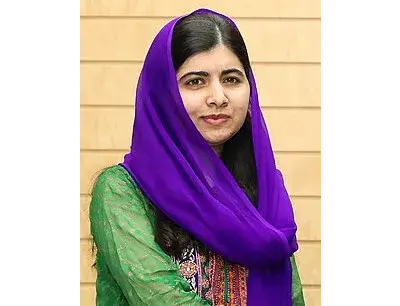
Malala Yousafzai, often referred to mononymously as Malala, is a Pakistani activist for female education and the youngest Nobel Prize laureate. She is known for human rights advocacy, especially the education of women and children in her native Swat Valley in Khyber Pakhtunkhwa, northwest Pakistan, where the local Pakistani Taliban had at times banned girls from attending school. Her advocacy has grown into an international movement, and according to former Pakistani Prime Minister Shahid Khaqan Abbasi, she has become "the most prominent citizen" of the country.
