Tariq Ali Quotes
The patchwork political landscape of the Arab world - the client monarchies, degenerated nationalist dictatorships, and the imperial petrol stations known as the Gulf states - was the outcome of an intensive experience of Anglo-French colonialism.
Ali, Tariq. The Clash of Fundamentalisms: Crusades, Jihads and Modernity. Verso, 2002.


Those who have fought against dictatorial governments for their basic human rights, found after victory and the overthrow of the dictator, that there was another force fighting for control which would deny citizens human rights based on a theocracy. They wanted the end of the dictator so they could use their interpretation of a religion as the excuse to deny all citizens basic human rights.

What makes the situation even more complicated is that most of the land of the Middle East has been governed by a succession of Empires who may have drawn the lines differently from the previous governing dynasty. For example, the land that is Israel today, has been governed by Egyptians, Greeks, Jews, Romans, various Arab dynasties, Turkey, England, and the Jews again. Turkey governed it for the longest period.


Part of the problem lies in a part of the Muslim religion which values stability over all else except Islam itself. Traditionally Muslims have been told to tolerate a bad, corrupt leader, unless he is blasphemous. So dictators who can create an alliance between themselves and the religious influentials by giving them money and allowing them to control civil society as in Saudi Arabia, have been insulated from rebellion and revolutionary forces.

While Peres and many others think that the Arab nations can become developed countries, there are major barriers in the way. One is oil. No country that has had a great deal of oil has ever developed. Then there is education. Israel’s technological success requires a very high level of education in secular subjects which no Arab nation provides. The Western cultural values of inquiry, freedom of thought, individuality are were in large part developed from the traditional Jewish values. The Muslims had these at the early 2nd millineum. But political and religious forces since then, have created contemporary Arab cultures whose vaues are in many ways antithetical to modern technological development.


The British Empire Controlled Most of the Middle East in the 1920s, and they presided over most of the creations of states in the region. Churchill was a major figure in British Colonial policy. The natural borders tended to follow rivers, mountain ranges, lakes other irregular geographical elements. Borders of straight lines were almost always artificial in that men (and a few women) decided upon them as a convenience. Churchill was personally involved in much of the line drawing for borders.
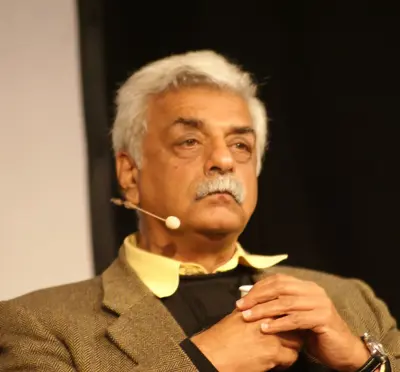
Tariq Ali is a British political activist, writer, journalist, historian, filmmaker, and public intellectual. He is a member of the editorial committee of the New Left Review and Sin Permiso, and contributes to The Guardian, CounterPunch, and the London Review of Books. He read Philosophy, Politics, and Economics at Exeter College, Oxford.
