Murray Rothbard Quotes
The Panic of 1819 exerted a profound effect on American economic thought. As the first great financial depression, similar to a modern expansion-depression pattern, the panic heightened interest in economic problems, and particularly those problems related to the causes and cures of depressed conditions.
Rothbard, Murray N. The Panic of 1819: Reactions and Policies. Columbia University Press, 1962, p. 1.


See {590238} for another of his related quotations.


Born thought that her agency was responsible for regulating the new esoteric financial products—derivatives including credit default swaps—for otherwise there would be no regulation at all of financial products that could dwarf the stock and bond market. Summers persuaded her to back off. When the Meltdown of 2008 hit, the huge derivative exposure of the large banks and some insurance companies was so great that it was one of the major causes for the meltdown of the entire banking system. Summers, normally a great economist not only called this one wrong, but later, along with most other government and private economists ignored a very explicit warning—See {637168}, {637986}, and {620038}.


This quotation amazes many people who believe that Hoover caused the Great Depression and that Roosevelt and the Democrats accused him of this. Actually, as Mrs. Roosevelt says here, the causes were the policies of the Republicans who preceded Hoover. Hoover was actually to blame for not doing much about the Depression. He believed philosophically that the Government should not “intervene” in the market place and that government assistance to individuals would damage their character. Most Americans saw this as uncaring and callous.


In the simplistic understanding of economics at the end of the 19th century, the cause of depression was thought by many socialists and others to be over-production in times of plenty. At the beginning of the 21st century, man was still unsure of the exact causes of recession and depression, although a number of different factors were proved to be involved.


Essentially Mellon told the President to let the entire economy crash. With huge numbers of people out of work, labor would be more humble and not only settle for lower wages, but will work harder, and without "excess" income beyond their basic needs, they would not drink and engage in other immoral activities. President Hoover, a wealthy man himself, did not go along with Mellon's idea of making the situation worse, but his conservative philosophy of government would not allow the Government to "interfere" with the private economy or give any direct assistance to the citizens.


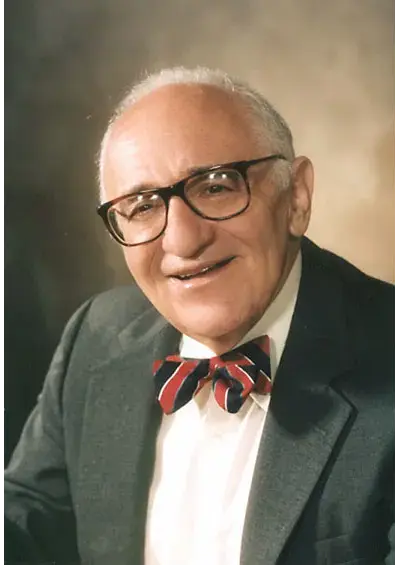
Murray Newton Rothbard was an American heterodox economist of the Austrian School, economic historian and political theorist. Rothbard was the founder and leading theoretician of anarcho-capitalism, a staunch advocate of historical revisionism and a central figure in the 20th-century American libertarian movement. He wrote over twenty books on political theory, revisionist history, economics, and other subjects.
