Priyamvada Natarajan Quotes
The pace and demands in any field, be it genetics, nanotechnology or cosmology, can only be met with increased international cooperation and collaborative projects.
Natarajan, Priyamvada. "The End of the Science Superpower?" HuffPost, 17 Aug. 2011.

Ingersoll was considered to be the greatest orator and political thinker of his day, but his overt atheistic views curtailed his elected political career.


To the general public Ballard is a star—the man who found the Titanic. Whereas he acknowledges that this has helped him raise money for science, but it has also caused him problems in the scientific community. Most important scientific work is done by teams and they depend on others who have laid the groundwork before them. Few are the Einsteins and the Fermi’s who on their own produce great scientific achievements.

Although not a scientist, Blackstone observed the advantage of an incubator, science center or other socially and intellectually interactive structure and realized that the cliché of a scientist alone in his laboratory was not the optimum environment in which science would flourish.

In the Dark and Middle Ages, it was the Muslim scientists who were the most advanced and they also preserved and improved upon Western science and other knowledge when Christianity was so intolerant that science was made virtually impossible to carry out. Then the Islamic world started closing and became more intolerant of new thought and the Christian West began loosening up. Serageldin does not feel humiliated at the current weak scientific status of Islam and urges reform to again have Islam involved in world class science. Islamic modernists like Serageldin are many among educated Muslims but their views are often drowned out by the violence and extremist statements of the fundamentalists.

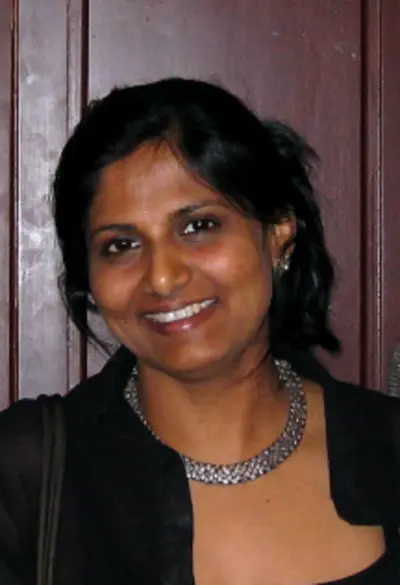
Priyamvada (Priya) Natarajan is a professor in the departments of Astronomy and Physics at Yale University. She is noted for her work in mapping dark matter and dark energy, particularly with her work in gravitational lensing, and in models describing the assembly and accretion histories of supermassive black holes. She authored the book Mapping the Heavens: The Radical Scientific Ideas That Reveal the Cosmos.
