Walter Savage Landor Quotes
The only effect of public punishment is to show the rabble how bravely it can be borne; and that every one who hath lost a toe-nail hath suffered worse.
Landor, Walter Savage. Imaginary Conversations of Literary Men and Statesmen. Vol. 3, Henry Colburn, 1828, p. 147.


Sapho, a play, opened in New York taking sexual explicitness to a new level. The hero, leaves the stage carrying the famous actress, Olga Nethersole, upstairs to an unseen bedroom presumably for sex. There was no explicit sex but the “immorality” lay in the fact that a woman was portrayed as a sexual being at a time when most “expert thinking” held that women were devoid of sexual pleasure. The New York City vice squad, responding to the many complaints, closed the show, causing national controversy which exploded further when the courts ruled that sexual innuendo was insufficient to censor the show and it re-opened.


Wade was urging the Prince to abolish the Death by 1000 Cuts {641825} and simply rely on beheading the form of execution for “lesser” crimes. Note that the Prince’s fears and arguments parallel the same given by modern proponents of the Death Penalty—without it criminals would not be controlled and instability would ensue.


Livermore's argument fell on deaf ears, and the amendment was passed over the objection of a few arch-conservatives.

This quotation while difficult for us to fathom today, illustrates a very conservative 18th century view of punishment and law enforcement. The South African high court was very distressed that torture was to be ended. To them, and many others throughout the so called “civilized” European cultures of the time, capital punishment was not a very good deterrent—even for slaves. The execution was usually accompanied by horrible torture and cruelty before death. Slavery was such a horrible life, and the White colonists knew it, that death could be welcome (many slaves had committed suicide). So the suffering at the execution was to serve as a further deterrent. In reality it did not, any more than capital punishment did in the 20th century, but by the logic of the culture and the times, torture was needed as well as capital punishment.


This is the earliest surviving attempt of the Romans to formulate a legal code.

This has been the case in EVERY jurisdiction that has had capital punishment. Capital punishment does provide vengeance for victims, relatives and society. And in many societies execution is less expensive than prison for life. But it has never curtailed crime despite the example. In London, they used to have public executions as examples to inhibit crime. While the crowd was watching a pickpocket be hung, other pickpockets were relieving many spectators of their wallets and watches.


There was, and still is in some parts of the world, this belief taht one of the main reasons for capital punioshment with visible and public executions was to deter others from comitting crimes by seeing the example of what happens to the transgressors. For these people, exemplified by this quotation of Dr. Johnson's, public executions are crime prevention. This notion tirned out to have been a fallacy. In England they found that during every public hanging, skilled pickpockets would steal from the onlookers who were tranfixed on the macabre secene--this despite the fact that pickpocketing was a hanging offence.

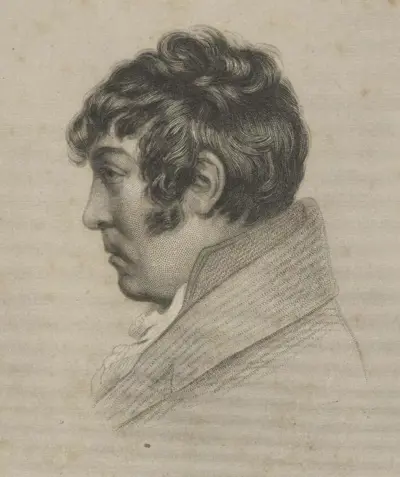
Walter Savage Landor was an English writer, poet, and activist. His best known works were the prose Imaginary Conversations, and the poem Rose Aylmer, but the critical acclaim he received from contemporary poets and reviewers was not matched by public popularity. As remarkable as his work was, it was equalled by his rumbustious character and lively temperament. Both his writing and political activism, such as his support for Lajos Kossuth and Giuseppe Garibaldi, were imbued with his passion for liberal and republican causes. He befriended and influenced the next generation of literary reformers such as Charles Dickens and Robert Browning.
