Daniel Bell Quotes
The old simplifications about "more" schools and "more" housing, or even "better" schools or "better" housing, have not proved very successful in breaking the cycle of poverty or in dealing with the Negro family structure.
Daniel Bell, 1919–2011, Sociologist, Harvard University, The Public Interest, Fall 1968
Sourced by: Eigen's Political and Historical Quotations

Olasky and many religiously oriented analysts, believe that public shame shapes and controls behavior and if a society does not have a set of recognized norms, and every person is free to determine his own propriety, there will be moral degeneration and there is no way to produce desirable social and political outcomes. This is perhaps the longest political and philosophical ongoing debate. In a society people cannot be free if there is fear, coercion and chaos with public safety primary. But how can this be produced unless there are generally accepted moral and behavioral codes like that of a religion. And then if one has that, and it is dominant, how can someone be free from the coercion of that morality or religious code? There must be freedom not to believe. Or must there be? Many say yes. Many others, especially orthodox leaders of most religions believe, No. Christian, Jewish and Muslim fundamentalists all say No, but then they insist that the norm be theirs.

Shortly after WWII, he became the largest builder in the United States. See {634380} for more depth on his view about segregated housing.

The cycle of poverty of 20th century America was not new. It has existed for centuries in most cultures and countries.


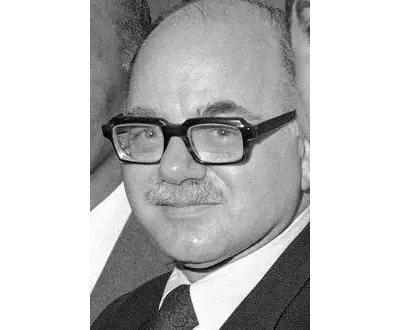
Daniel Bell was an American sociologist, writer, editor, and professor at Harvard University, best known for his contributions to the study of post-industrialism. He has been described as "one of the leading American intellectuals of the postwar era". His three best known works are The End of Ideology, The Coming of Post-Industrial Society, and The Cultural Contradictions of Capitalism.
