George Washington Quotes
The object of your detachment is to compel the mutineers to unconditional submission, and I am to desire you will grant no terms while they are with arms in their hands in a state of resistance …. If you succeed in compelling the revolted troops to a surrender you will instantly execute a few of the most active and most incendiary leaders.
The New Jersey Militia had mutinied and Washington dispatched Howe to put down the mutiny. Most Americans today do not think of George Washington as particularly blood thirsty, but when he was angered he was very tough. In this case ordering executions before the culprits were apprehended or tried or given a chance to explain themselves. What made matters worse for Washington was that there had been other mutinies of troops even in nearby Pennsylvania and America soldiers had plenty to be resentful about. They were ill fed, hardly clothed, and poorly armed. In addition they were often paid late. Washington himself had been the biggest complainer to Congress, but as much as he sympathized with the mutineers complaints, he would not tolerate a mutiny.
George Washington, 1732-1799, 1st President of the United States (VA), Order to Robert Howe, January 22, 1781
Sourced by: Eigen's Political and Historical Quotations


During the American Revolution, conditions were very difficult for Washington’s soldiers who were ill armed, ill clothed, and ill fed while they were paid irregularly. At one point morale was so low that some of the soldiers revolted. Smyth observes that Washington and Congress disciplined the mutineers very mildly, especially when compared with the way the British would deal with such things. The British Governor Clinton tried to take advantage of the mutiny and the poor morale by announcing that all of Washington’s troops who wished could obtain amnesty and join the British forces where the pay and conditions were much better. Professor Smyth found it fascinating that none of the Americans would join the British and he credits it to the wise and mild discipline policies of Washington and Congress as well as the general perception of the justice of the American cause among the American troops.

The Roman Catholic Defender Organization had about 300 thousand volunteers, and Belfast was the central location of the Defender leaders.

This quotation shows that the dissent leading to the American Revolution did not emerge suddenly in 1776 after the Battle of Bunker Hill. Dissent, sedition and even violence was documented here in 1774. Salem at the time was the second largest port in the colony and the customs tax collectors—Loyalist Americans—were run out of Salem.

The Civil War was on.

This part of the war was particularly bloody as Marion and his opponent Colonel Tarleton both committed atrocities and war crimes against the civilians who supported the other side or tried to remain neutral. Marion was promoted to General.

Rush ran the hospitals for the Revolutionary Army and talked to many officers and enlisted men, and also observed much of the British military practices. These suggestions were discussed but never passed as regulations. They are fascinating insights into the problems of the general officers of the time who were generally selected for their socioeconomic status rather than other qualifications. Note the drunkenness limitation for a commanding general was proposed to be limited to only 1 allowed bout of drunkenness every 24 hours. It was, he thought, totally unrealistic to require generals to be always sober when on duty. With the mediocre quality of senior officers, Washington had to depend on foreigners like Lafayette, Von Steuben and others. And Generals who were leading attacks out in front of their men like Benedict Arnold immediately became heroes and one of the reasons he ended up as a traitor was that he thought that he was badly treated relative to the “society” Generals who would not accept him and denigrated his exploits when they themselves had never been close to a battle front.

Von Stuben brought a formal discipline and organization to the American army and is referred to as “The Father of the U. S. Army.” Beaumarchais was a leading dramatist as well as a secret agent and his communiqués were doubtless the most flowery in the history of espionage and spying.


He was wrong. The protesters were general including merchants, lawyers, politicians, shopkeepers, sailors and other occupations. The Privateer Captains were no more or less involved as other occupations.


Earlier, his father had also castigated the ministers over their inept hard-line handling of the American Revolution. See {641505} .

The De Lancey family were prominent New York businessmen and politicians who were British loyalists in the American Revolution. At the end of the war the De Lancy estates were confiscated and the family went to England and Canada. Despite the unpopularity or the family, there is a major street in New York City that bears their name: De Lancy Street.

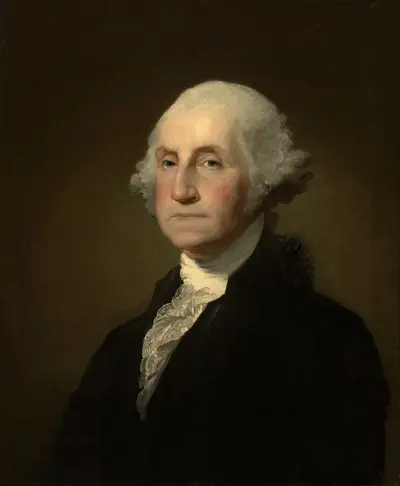
George Washington was the first President of the United States (1789-97), the Commander-in-Chief of the Continental Army during the American Revolutionary War, and one of the Founding Fathers of the United States. He presided over the convention that drafted the current United States Constitution and during his lifetime was called the "father of his country".
