Isoroku Yamamoto Quotes
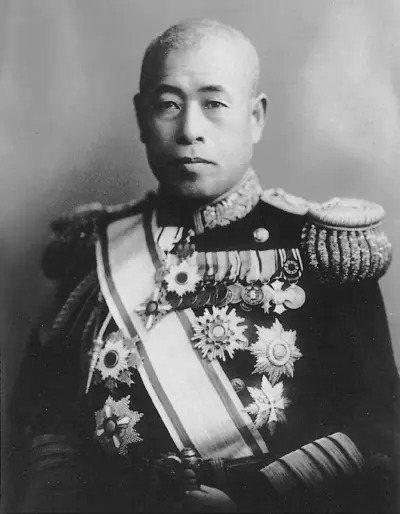
The most important thing we have to do first of all in a war with the U.S., I firmly believe, is to fiercely attack and destroy the U.S. main fleet at the outset of the war so that the morale of the U.S. Navy and her people goes down to such an extent that it cannot be recovered.
Goldstein, Donald M., and Katherine V. Dillon, editors. The Pearl Harbor Papers: Inside the Japanese Plans. Brassey's, 1993, p. 115.


Military men tend to rely so much on military history that they are almost always fighting the last war. Soon air power would supplant sea power as the critical factor. Then nuclear power, and then nuclear weapons became too severe for actual use and yet wars still continued with no consensus as to that will be in the future.

Koxinga had an overwhelmingly superior force, and wanted the Dutch to surrender and avoid bloodshed. The Dutch with their typical European colonial attitude, had great difficulty surrendering to “natives” even if outnumbered. Finally, the Dutch Commander agreed to surrender. Koxinga then established a Chinese Government on the Island and became a great hero of the Ming Dynasty. Note the graphic of the statue to him which is one of the very few Chinese memorial statues to a military hero showing him in action—very similar to European statues. Already Koxinga’s massed wooden junks with small cannon and fire torches had sunk one of the Dutch warships (they were not iron but had some iron plates on the deck to protect the gunners) and there were so many junks that the other Dutch ships sailed out to sea to avoid the Chinese huge number of junks.


Xerxes ignored her advice and attacked the Greek fleet at the Battle of Salamis. As Artemisia had predicted, the outnumbered Greeks routed the forces of Xerxes’ coalition preserving “The West” from dominance by “The East.” Artemisia’s fleet was the only one in the coalition to enjoy military success in the battle. See Xerxes {45633}. Artemisia is one of the first female military leaders and the only female naval commander until the end of the 20th century. She was 2500 years before her time.

World War I World War II
