Edward Mandell House Quotes
The more advanced nations have laws recognizing the sanctity of property and the protection of person, but international laws and ethics have not kept pace with intra-national laws and ethics.
Edward Mandell House, 1858-1938, Army Colonel and Aide to President Wilson & President Taft, “The Running Sands”, Foreign Affairs, March 1923
Sourced by: Eigen's Political and Historical Quotations


Prior to that the accepted phrase was “Law of Nations,” but soon after Bentham first used “International Law” it caught on and became widespread in the English Language. See Columbia Law Review, Vol. 5, No. 2, February 1905

It is surprising that these ideas would come from one of the most autocratic powerful monarch in the world at the time. However there were many very liberal influences on her from Europe. This set of proposals she even sent to Voltaire to get his feedback and criticism. As late as 2006 the American President was reluctant to outlaw torture for terroristsand the Vice President actually argued for its retention as an interrogation technique. Over 300 years earlier the autocrat of Russia argued against it.


L. P. Jacks. If politicians followed the clerical calls for Christian ethics in international affairs, they would not easily maintain their positions and power. See {640093}.


For over 50 years both the United States and Cuba had carried grudges about the Bay of Pigs, the boycott on purcuase of life saving medicine and U. S. attempts to assassiate Fidel Castro on the Cuban site, and the expropriation of Americans' Coban Prepoert, the poor record on human rights, the Mariel Boat Lift, and the harboring of American criminals for the United States. The policy positions held by the two nations had not produced anything constructive so the parties agreed to try and build closer ties. In just two years of a limited reproachment some progress had been made and Prices point about getting beyond the past tried to get all focussed on the future.

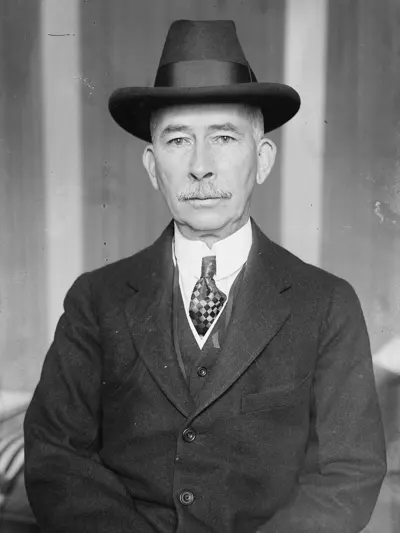
Edward Mandell House was an American diplomat, and an advisor to President Woodrow Wilson. He was known by the nickname Colonel House, although he had performed no military service. He was a highly influential back-stage politician in Texas before becoming a key supporter of the presidential bid of Wilson in 1912. Having a self-effacing manner, he did not hold office but was an "executive agent", Wilson's chief advisor on European politics and diplomacy during World War I (1914–18) and at the Paris Peace Conference of 1919. In 1919 Wilson, suffering from a series of small strokes, broke with House and many other top advisors, believing they had deceived him at Paris.
