Edward Abbey Quotes
The missionaries go forth to Christianize the savages - as if the savages weren't dangerous enough already.
Abbey, Edward. A Voice Crying in the Wilderness (Vox Clamantis in Deserto). St. Martin's Press, 1990.


This church which was so active later in sending missionaries throughout the world, at first thought the idea absurd.

In 1898 the President was faced with a great dilemma in the Philippines. Giving the islands back to Spain after the war was unthinkable. Germany and France were waiting to step in. Self government was viewed as impractical, given the state of affairs at the time. The President decided to take the islands.

This was a large part of the “moral” justification of conquering the New World peoples.


Christian Neophytes were Indians who claimed that they had converted to Christianity. The French initially banned giving or selling firearms to the Indians of North America. However in 1640, they made an exception to provide arms to the Huron Indians who they thought had converted to Christianity. Four years later the Jesuits were using guns as the major motivation for conversion of Indians. The hypocrisy of using weapons of war to attract converts to a religion of peace gave way to the incredible success that the trading of guns for souls had achieved. The French military also thought that the armed Indians could be used as allies in the coming battle with England for control of North America. The English then armed their Indian allies, and the French and Indian Wars saw armed Indians on both sides.


Brant had an English style Missionary education and was an Anglican, belonging to the Church of England. During the American Revolution, he persuaded most of the Iroquois tribes to fight for the British against the revolutionary colonists. However, the Oneida tribe was not persuaded and joined the rebel side. A few New England Presbyterian missionaries had targeted the Oneida people, and when that tribe chose the “wrong” side, Brant believed that the reason was their different religious point of view. After the Revolution, Brant and his Iroquois followers were driven out of their American lands and escaped to Canada, while the Oneida were given complete title to their lands by George Washington.

this is a joke Tutu has used, but variants of it exist which are not original to him.
He had concluded that Spain, who then ruled the Philippines, was incompetent, cruel and immoral in its rule, but that the Filipinos were not educated or sophisticated enough to rule themselves. However, he felt that he had to protect our commercial interests in the islands and the region, and was worried that commercial interests of other countries would take over and control the area. Another reason that this is a very important quotation is that it indicates the anti-Catholic bias in America at the time. Note that the President stated that one objective was to “Christianize” them. However, Spain had been in the islands for over 300 years and most Filipinos were already Roman Catholic. However, Roman Catholics were then a much smaller proportion of the American population and many Protestants didn’t think Catholicism was a legitimate Christian Religion. When the majority of Americans thought of Christianizing other people, they thought of Protestant missionaries much like England. At the time there was very little criticism of the President for the “error” of stating that Filipinos should be Christianized when they were so already Spanish Colonial Policy and Practice was generally terrible and particularly so in the Philippines, See {629450}.
Damn this world, Damn this time. Damn this fate That uncivilized Arabs have come to make me a Moslem
This is a huge epic poem that he wrote over several years. At the time, the Persians considered themselves far more civilized and sophisticated than the Arabs who were but tribesmen. They really resented the fact that it was the Arabs that brought Islam. And before, most of the Persians worshipped Zoroaster. Although Islam spread faster and further than any religion in history, it was not always easily accepted as this stanza of the poem indicates. There is to this day a superiority that the Iranians perceive over the Arabs. And to this day, many Arabs resent the Iranians for this attitude.


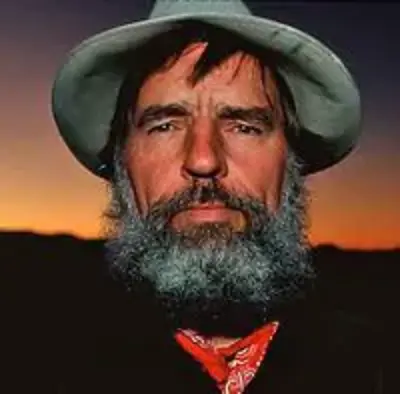
Edward Paul Abbey was an American author and essayist noted for his advocacy of environmental issues and criticism of public land policies. His best-known works include Desert Solitaire, a non-fiction autobiographical account of his time as a park ranger at Arches National Park considered to be an iconic work of nature writing and a staple of early environmentalist writing; the novel The Monkey Wrench Gang, which has been cited as an inspiration by environmentalists and groups defending nature by various means, also called eco-warriors; his novel Hayduke Lives; and his essay collections Down the River (with Henry Thoreau & Other Friends) (1982) and One Life at a Time, Please (1988).
