John le Carre Quotes
The merit of 'The Spy Who Came in from the Cold,' then - or its offence, depending where you stood - was not that it was authentic, but that it was credible.
Le Carré, John. "John le Carré: The Spy Who Came in from the Cold Turns 50." The Guardian, Guardian News & Media, 12 Apr. 2013.


Actually the United States has a long history in interfering with foreign elections throughtout Latin American Countries, Europe, Asia,, and Africa. Russia also has been trying to tilt elections recently in Eastern Europe and befroe the COld War the International Communist Party was involved trying to swing elections since shortly after the Russin Revolution. Before that the Czars agents were involved in many foreign elections. But the United States and Russia historically are relative newcomers and rank amateurs in interering with foireign elections when compared with Germany and France and the Champion--Great Britain who controlled much of the world and very often promoting democratic values like elections throughtout the world and then workign to manipulate those elections. Japan and Chine did much less of this historically. Instead they just conquored other counties and placed their puppets in charge. What was new in teh 2016 Russian interference in the American Election was the fact that it was done by hacking computers. Putin had accused Hillary Clinton of Interfering with the Russian election when he last ran for President by funing Russian organziations that oppo


The 1st the CIA ever had. Popov was, in the 1950s, considered the CIA’s most valuable agent. He was motivated by deeply felt anger at Soviet exploitation of Russian peasants, including his family. He was caught and executed by Russian authorities in 1960. The quotation illustrates just how simple was his initial communication for spying.


Agree resigned from the CIA in protest to its political positions.
This fact was one of the reasons that McCarthyism and HUAC were able to get traction. The Red Scare paranoids found something to really worry about. They overreacted, sensing the problem not as one of a large number of misguided and naïve people trying to help America do better, but as active spies controlled by the Kremlin who wanted to destroy the American way of life. There were two basic reasons these naïve officials acted that way. Many of them had not forgotten the devastation of the American people in the Great Depression and believed that capitalism had almost failed completely and the rough edge had to be taken off American capitalism by injecting some socialist principles such as stronger labor unions, ending racial and religious discrimination, controlling monopolies, and regulating critical industries. They also were mindful of the fact that the Russians were bearing the brunt of the WWII casualties—military and civilian—while killing more of the Germans and capturing more German occupied territory than the other allies together, yet they were not receiving the same level of assistance—technical, intelligence, economic and political as the British. They saw helping the Russians as saving American lives on the battlefield by making them more effective and keeping German soldiers and weapons away from the Western front and Americans. They also remembered that many in Congress were opposed to our entering WWII in Europe until Germany declared war on America. They had in many cases been apologists for Fascism and passionate enemies of communism. Some American industrialists like Henry Ford were anti-Semitic and overt admirers of Hitler. {586985} So these officials tried to redress the imbalance that existed while at the same time little was really known about Soviet Russia and the Stalin excesses that were as bad as some of Hitler’s. {634969} The only information Americans had were the terrible casualties the Russians were taking and the in kind that they were dishing out to the Germans. The number of Soviet spies in America were few and commensurate with the number of agents we had in Russia. But few Americans realized the difficulty the U. S. and the rest of the democratic world would have with Russia after the war was won.


Kennedy was a relatively new president and the Bay of Pigs Operation was prepared and planned by the CIA under the Eisenhower Administration. The president assumed that the intelligence was correct and there would be an uprising of the Cuban people when as soon as the landing took place. That was all wrong and the Cubans actually supported Castro and the operation was a disaster. Kennedy never trusted the CIA after that.

The U. S. Counterintelligence team identified several KGB agents who were stealing American technology in various forms. Gus W. Weiss of the National Security Staff devised a plan where instead of arresting the Russian agents, FBI agents posed as mid-level science and technology workers who could be bribed to turn over American technology. Then they provided technology that did not work which the Soviets then proceeded to engineer and fabricate the techniques which never worked correctly. By the time the Russians found out they had wasted much effort and money at spying and engineering.


In 1937 four nationalist army columns were converging on Madrid in the Spanish Civil War. General Mola was asked which column would take Madrid. His reference to the sympathizers inside the city became a universal term for traitors.
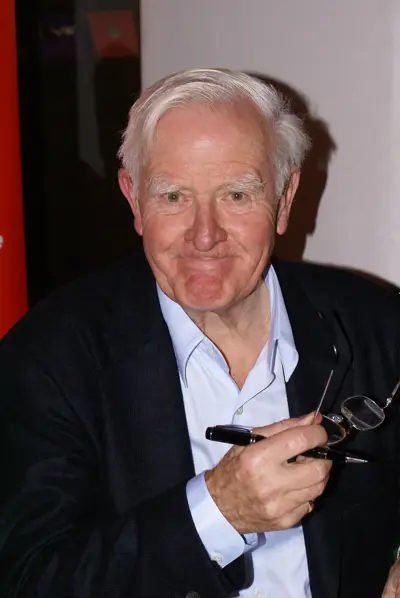
David John Moore Cornwell, better known by his pen name John le Carré (/ləˈkæreɪ/), was an English author with Irish citizenship, best known for his espionage novels. During the 1950s and 1960s, he worked for both the Security Service (MI5) and the Secret Intelligence Service (MI6). His third novel, The Spy Who Came In from the Cold (1963), became an international best-seller and remains one of his best-known works.
