Theodore Roosevelt Quotes
The members of the bicycle squad, which was established shortly after we took office, soon grew to show not only extraordinary proficiency on the wheel, but extraordinary daring. They frequently stopped runaways, wheeling alongside of them, and grasping the horses while going at full speed; and, what was even more remarkable, they managed not only to overtake but to jump into the vehicle and capture, on two or three different occasions, men who were guilty of reckless driving, and who fought violently in resisting arrest. They were picked men, being young and active, and any feat of daring which could be accomplished on the wheel they were certain to accomplish.
He created a Bicycle Squad and named it the “Scorcher Squad”. The squad not only overtook and arrested horse drawn carriages going to fast, but became heroes by riding up to runaway horses and slowing them down by grabbing the reins or jumping on the rig. Roosevelt used every incident to promote his modern innovation in policing.”
Theodore Roosevelt, 1858-1919, 26th President of the United States (Republican, NY), Description of his innovational use of technology even when he was the New York City Police Commissioner in 1895
Sourced by: Eigen's Political and Historical Quotations


The major police union in NYC. The Mayor had run on a campaign of police reform with Lynch one of his most virulent political enemies. The killer who came to New York was very disturbed over the spate of police killings of unarmed Black boys and young men for which there were no indictments or other actions of accountability. One of these was a homicide committed by a New York police officer who, against Police regulations used a choke hold on victim while 4 other officers were restraint him as he choked to death. There were no charges files, even after the coroner had declared the death a homicide. There were major demonstrations and protests in New York and elsewhere and the Mayor had defended the right of citizens to peacefully protest, Lynch’s “logic” was that the mayor’s softness against demonstrations against the police encouraged the Baltimore man to come to New York and murder the 2 police officers. The Mayors clear and unmistakable disapproval of the violence against police {642497} somehow was taken as the opposite by Lynch and other New York police officers.


See {637047}for a description of the racial profiling, infiltration program.

There were not only no convictions as a result of this ethnic profiling and warrantless surveillance but there was not even a single lead generated. See {637048}.

The judge found that Blacks and Hispanics were stopped and frisked at a much higher rate than whites despite the fact that whites, when they were stopped and searched had a higher rate of carrying an illegal gun or illegal substances.


New York City police are generally better than most in training. However, by far most murder investigations have at least one police and district attorney error and often many more. The rules, procedures, and protocols are quite complex, and police are often not adequately trained. Most departments are understaffed and the caseload is much too heavy. There is huge political and public pressure on murder cases so police often make mistakes to respond rapidly for the demand for information. The way the laws are written in almost all states, the police officers are not legally responsible when they do make errors even if it results in an innocent person going to jail and the real criminal still being at large. Generally, except in a few cases, the courts will not throw a case out just because police or district attorneys do not follow required procedures, and in some departments there is a good guy vs. bad guy mentality and there is a norm of just getting the bad guys off the streets and not worrying about all the details of investigating alternative possibilities and this results sometimes in illegally hiding these from the defense. Evaluations of this kind are rarely performed, in that most departments see no advantage to uncovering and publicizing the mistakes of the past. This study is also used by many who oppose the death penalty to illustrate the large error possibility with capital cases where execution precludes uncovering the errors and mistakes.

5 New York City—Staten Island--police officers were arresting a large unarmed Black man, and one of them used a “choke hold” which was against Departmental Regulations. The man cried out several times that he was having trouble breathing and he was choking, until he was choked to death. The coroner ruled that a crime had been committed and the death was a homicide. However, the Staten Island District Attorney and his Grand Jury refused to even indict the officer that did the choking. Staten Island was a very conservative, white enclave in New York City. See {642459}.

He was referring to a case where an unarmed criminal suspect was being arrested by 5 police officers who choked him to death in what the coroner ruled was a homicide. Some police union spokesmen justified the homicide on the grounds that the victim had resisted arrest (in great question from viewing the video tapes). “Had he not, he would not be dead”. The spokesman ignored the fact that the choke hold that the police used was prohibited by the Police Department Manual and Rules as well as imprudent and unnecessary in that case. Surely 5 trained policemen can physically control 1 unarmed man without choking him Sharpton observed, and with this pithy quote, put the tragedy into perspective as a violation of civil rights.


The “third degree” was widely used by police throughout the nation. It was in relatively progressive New York City that the practice was first widely investigate, exposed and curtailed. Most of the country followed suit, but unfortunately, the practice still exists, but is much less common than in the 1930s.

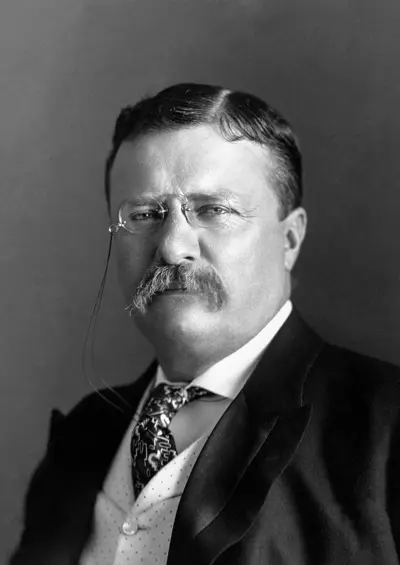
Theodore Roosevelt Jr., often referred to as Teddy or his initials T. R., was an American statesman, conservationist, naturalist, historian, and writer, who served as the 26th president of the United States from 1901 to 1909. He previously served as 33rd governor of New York from 1899 to 1900 and the 25th vice president of the United States from March to September 1901. Roosevelt emerged as a leader of the Republican Party and became a driving force for anti-trust and Progressive policies.
