National Commission on Law Observance and Enforcement Quotes
The investigators were repeatedly told not by sensation mongers but by observers of high position and ability, long experience and unquestioned disinterestedness that the courts know that some of the prosecutors are crooked and the prosecutors know that some of the courts are crooked, and both know that some of the police are crooked, and the police are equally well informed as to them. If a policeman or detective who has worked hard and effectively to land a bad criminal in jail sees him get off through improper influences, he will tend to be less zealous in the next prosecution. He will be inclined to take the easiest course and merely try to get a confession without a too nice regard for the means employed.
Wickersham Commission, National Commission on Law Observance and Enforcement, Final Report, January 7, 1931
Sourced by: Eigen's Political and Historical Quotations


Adopted by the original Edinburgh Review Magazine as its motto.
This statement was an extension of the famous quotation of Oliver Wendell Holmes Jr. {603715}.


Not all police take bribes from drug dealers and operators but many do. Of the minority who are corrupt, the drug dealers are the source of most of the money.

Critics ask, “If legal authorities are so corrupted by making others suffer, why do they continue to do it, and why so much official corruption? Mises never provided an answer to this dilemma.


New York City police are generally better than most in training. However, by far most murder investigations have at least one police and district attorney error and often many more. The rules, procedures, and protocols are quite complex, and police are often not adequately trained. Most departments are understaffed and the caseload is much too heavy. There is huge political and public pressure on murder cases so police often make mistakes to respond rapidly for the demand for information. The way the laws are written in almost all states, the police officers are not legally responsible when they do make errors even if it results in an innocent person going to jail and the real criminal still being at large. Generally, except in a few cases, the courts will not throw a case out just because police or district attorneys do not follow required procedures, and in some departments there is a good guy vs. bad guy mentality and there is a norm of just getting the bad guys off the streets and not worrying about all the details of investigating alternative possibilities and this results sometimes in illegally hiding these from the defense. Evaluations of this kind are rarely performed, in that most departments see no advantage to uncovering and publicizing the mistakes of the past. This study is also used by many who oppose the death penalty to illustrate the large error possibility with capital cases where execution precludes uncovering the errors and mistakes.


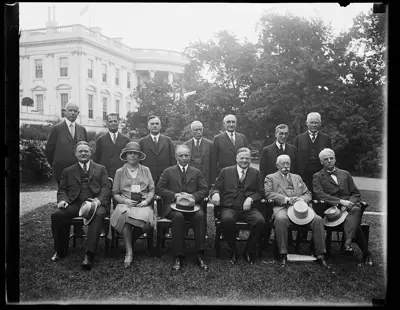
The National Commission on Law Observance and Enforcement chaired the 11-member group, which was charged with surveying the U.S. criminal justice system under Prohibition and making recommendations for public policy.
