Shabonee Quotes
The man's leg was broken and he had another bad wound. I could have taken his scalp easily, but Sabaqua, the old chief, begged me not to kill him. He wanted to take him to his wife alive, in place of her son whom the white brave had killed.
Enemy captives were sometimes adopted by Indian families to replace a lost loved one.
Shabonee, 1775-1859, Potawatomi Indian Chief, Quoted in Solon Robinson, Me-Won-i Toe, 1864
Sourced by: Eigen's Political and Historical Quotations

Attila the Hun

The Abenaki Indians from Canada had come South and raided many of the settlements of upstate New York. In the process, they committed many atrocities killing civilian men, women and children. Amhurst ordered Robert Rogers and his rangers to attack the Abenaki home villiage in Canada on a famous punitive raid. The Rangers, did indeed, raid the Abenaki and wiped out all the males of the tribe that were in the camp at the time. Amhurst hated Indians, but still had his standards regarding the killing of women and children, but was perfectly willing to kill all the mature males. There were no Geneva Conventions at the time. The same general introduced biological warfare by giving Indians smallpox infected blankets. See {619646}


Over the years Sherman’s advocacy of Indian extermination went beyond the Sioux to all Indians.
Sherman, one of the most gifted generals of the Civil War. He hated the cruelty of war and the Civil War in particular as he had specifically warned his Southern friends ahead of time about what war would bring. See {585882}. Sherman was one of the first American military men to look at war without any of the romantic, patriotic, noble attributes that most others did.


The invasion failed, Hull lost even Detroit and the Michigan territory and was later court-marshaled.


The President had earlier threatened to execute Confederate prisoners, if the South implemented its threat to execute any Union Negro soldiers they captured. The threat seems to have worked. See Lincoln.

They had seen many other abolitionists attacked and butchered by the pro-slavery forces. The civil war of Kansas was over whether Kansas would enter the Union as a slave state of a free state. If a free state, the free states would be able to block further slavery. If Kansas were to become a slave state, the slave states would have a sufficient majority to make all future expansion hospitable to slavery. The slavery forces started sending man and families into Kansas so that they could vote; the abolitionists did the same. Both sides armed and a war began with each faction trying to kill or drive the other faction out of Kansas before the vote. See {617388} and {612516}.


Logan was considered a great orator by Indians and whites alike. See {620551} .


The prisoners were shot. Over a decade later, Fremont was running for the Presidency against Buchanan. This incident became public and hurt Fremont with many voters.


He was leading the Gordon Highlanders of the British Army against the Boers during the Boer War. He was seriously wounded and could not go on himself with a charge he had ordered, However, waifing his sword he made this famous qutation. Particualrly noteorthy is the derrogatory terms which he used to describe the enemy--the Boers of South Africa. In many wars and cultures, one or more of the combatants, in order to overcome the avarage soldier's reluctance to kill an enemy, characterizes them as less than human. In this case, vermin, who were to be exterminated. There were two predominant groups of whites who came to South Africa, the English who were generally well-educated and were interested in trading with the exhisting inhabitants and investing in businesses using mostly native labot and the Boers. The latter were of Dutch and German origin, poor farmers with little or no land in the home country and little education. Their interest was to create a nation where they could own land to farm. And the lest expensive way for them to increase their farmland was to sieze it from the native Blacks and who were the major forces behind the racial discrimination which became apartheid. The British contolled the government and sought stability and as in most of the British Empire, they wanted English law to prevail including the rights of the Black natives. The Boers had left Europe for good and would thrive or not in Southern Africa. Proportiopnately, the English might have a career in South Africa or serve there for a few years. They were Englishmen in a foreign country. The Boers saw themselves as citizens of Southern Africa who were fighting the native Blacks for control of the land. The English legal system would not allow any of the land seizures and political discrimination that the Boers saw as existential for their survival in Africa. Soon, the Boers took more and more of the law into their own hands and saw English rule and dmination as inimical to their interests in Africa and they tried to create their own independent states in Southern Africa. That was the essense of the Boer Wars. Dick-Cunyngham was awarded the Victoria Cross, the highest military decoration of Great Britain, for his exploits in the Afghan War.

A number of the American soldiers refused to obey Calley's illegal order. Some helped some villagers to escape, and a helicopter pilot landed betreen Callery's men and the villagers they were shooting at, and ordered his helicopter machine gun crew to fire on the soldiers if they did back off. The soldiers stopped firing at the civillians. However, his and other reports of the massacre were covered up by the military for a few years. Mai Lai was not the only major war crime perpetrated by Americans in the Vietnam War; there had been a few others. But given the years of fighting and the many opportunities war crimes violations under orders were quite rare. The Viet Cong had many more war crimes that they perpetrated, and our South Vietnamese allies repeatedly committed war crimes against their own people.


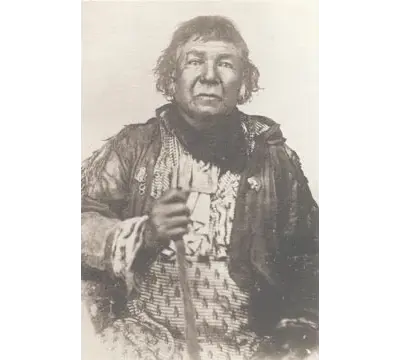
Shabbona (or Sha-bon-na), also known as Shabonee and Shaubena, (c. 1775–1859) was an Ottawa tribe member who became a chief within the Potawatomi tribe in Illinois during the 19th century.
