William Lamb, 2nd Viscount Melbourne Quotes
The leaders of a party, or those who are so called, have but little sway over their followers, particularly when not in Government, and when they have it not in their power to threaten them with any very serious consequences
2nd Viscount Melbourne. Party discipline has been a problem for party leaders whenever there are political parties.
William Lamb, 1779-1848, British Prime Minister (Whig), Letter to Queen Victoria, April 6, 1842
Sourced by: Eigen's Political and Historical Quotations


In 2006 the Republican Party controlled both houses of Congress and the Presidency. A national debate began over illegal immigration and the Republican party was split over what to do about the 11 million illegal immigrants living and working among us and their roughly 3 million American-born children who were citizens of the United States. The Republican House and the Republican Senate were at loggerheads over two different approaches to the problem and nothing was getting done.


3rd Viscount Palmerston. Lajos Kossuth was the Hungarian leader of anti-monarchists who were agitating for a Parliament. While many English people sympathized with Kossuth, his government, which had good relations with England, did not want any of the other European Governments to officially meet with him. It was considered insulting to a government if a friendly government met officially with a politician who was not approved by his own government. Palmerston, as Temple was referred to, wanted to show English sympathy with the reforms advocated by Kossuth. He was then the Foreign Minister and wanted to invite Kossuth to the Foreign Ministry. However the Cabinet had a meeting and voted against the idea which would not only inflame the Hungarian government, but would outrage all the other countries in Europe for this diplomatic insult. Palmerston then decided that he would meet with Kossuth in his private residence. When the Prime Minister discovered this plan, he sent a note by messenger telling Palmerston that he was the Foreign Minister and inviting Kossuth to his home could not be seen as an official action. Palmerston has his own political base and had enough supporters in Parliament that if he would be fired, he could bring down the coalition government. So in effect he told his Prime Minister off and dared Russell to fire Palmerston. Then he went ahead with the meeting. The cabinet was upset, Queen Victoria was outraged (she never cared for Palmerson as a Foreign Minister), the Newspapers had a field day, and all the European counties complained vehemently to the Queen and the Prime Minister. But Russell didn’t dare fire Palmerston at that point. However, with Queen Victoria’s shrewd political maneuvering and Russell coalescing support, he was able to demote Palmerson to Home Secretary and assume the Foreign Ministry himself in 1952. However, Palmerston had the final winning hand, when 3 years later, he was elected Prime Minister and he and the Queen had to make a rapprochement.


Platt was the boss of the Republican Party which controlled New York State, His personal office was at 49 Broadway in New York City. See {622998} for more on Platt power in New York.


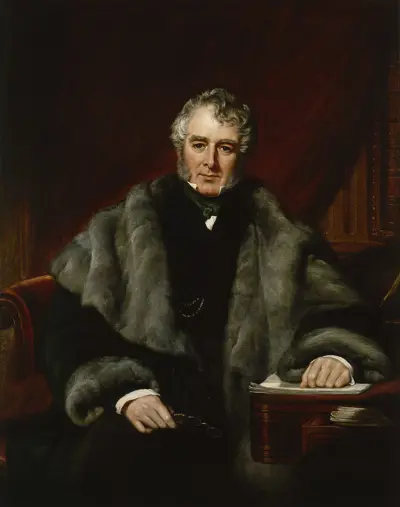
William Lamb, 2nd Viscount Melbourne, PC, PC (Ire), FRS, in some sources called Henry William Lamb, was a British Whig Home Secretary (1830–1834) and Prime Minister (1834 and 1835–1841). He is best known for being prime minister in Queen Victoria's early years and coaching her in the ways of politics, acting almost as her private secretary. Historians have concluded that Melbourne does not rank highly as a Prime Minister, for there were no great foreign wars or domestic issues to handle, he lacked major achievements, he enunciated no grand principles, and he was involved in several political scandals in the early years of Victoria's reign.
