George Mason Quotes
The Laws of Nature are the Laws of God, Whose authority can be superseded by no power on earth. A legislature must not obstruct our obedience to Him from whose punishment they cannot protect us. All human constitutions which contradict His laws, we are in conscience bound to disobey.
Mason, George. Argument in Robin v. Hardaway. 1772. Reports of Cases Determined in the General Court of Virginia, edited by Thomas Jefferson, F. Carr, and Co., 1829, p. 114.

The President did not apparently think that this would be a religious test of office which would be prohibited by the Constitution.


The Judge, a fundamentalist Christian, unilaterally had a large granite monument of the Ten Commandments installed in the Rotunda of the Supreme Court Building. A Federal Judge in deciding a lawsuit ordered him to remove the monument which was held to have been placed there to symbolically uphold the supremacy of the Judeo-Christian tradition in our legal system. Judge Moore appealed to the U. S. Supreme Court which let the removal decision stand. However, the judge still resisted. The other 8 Alabama Supreme Court justices then removed the Chief Justice and ordered the monument removed. Moore who had been selected to office in a “Bible-Belt State,” still blocked the removal forcing a showdown with the Federal Courts and his colleagues in Alabama. Shortly thereafter, both the monument and Judge Moore were removed.

On the Fugitive Slave Act: As one of the leading American Catholic intellectuals during the 19th Century, Brownson’s opinions went far in keeping Catholics from joining the side of the abolitionists. However, just a few years later his tone would change and he would become one of the few Catholic writers to refuse to defend slavery, see {610710}. While the majority of Catholics refused to join the abolition movement, they often did so because abolitionism was closely tied to anti-Catholicism, see Gordon {611392} or Shaftesbury {611106}. Other reasons included Irish immigrants fearful of competition from Black labor and the fear of liberal individualism and social disorder, which was prevalent in 19th century Catholic thought. For a further explanation on the relationship between American Catholics and slavery, see McGreevy {612036}.

Watchtower Bible and Tract Society of New York

Niemoller, a World War I U-boat commander and clergyman, was jailed for rejecting the National Socialist ideology and for appealing to German Christians not to embrace the new paganism of Nazism and Fascism.


This verse has been one of the bases of Muslim theocratic states like Iran’s claim to legitimacy. The word “govern” is sometimes translated as “judge.” In the context of the 6th century, there were no separation of powers as we know them and judging, governing and legislating were melded.


Whoever teaches differently from what I have taught, … condemns God and must remain a child of hell.
Humility and doubt were not characteristics of Martin Luther.


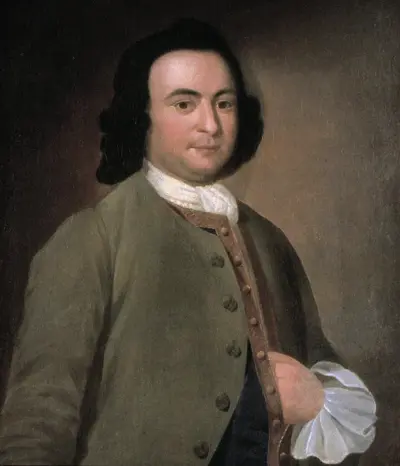
George Mason IV was an American planter, politician and delegate to the U.S. Constitutional Convention of 1787, one of three delegates who refused to sign the Constitution. His writings, including substantial portions of the Fairfax Resolves of 1774, the Virginia Declaration of Rights of 1776, and his Objections to this Constitution of Government (1787) opposing ratification, have exercised a significant influence on American political thought and events. The Virginia Declaration of Rights, which Mason principally authored, served as a basis for the United States Bill of Rights, a document of which he has been deemed a father.
