Vermont Quotes
Adopt the laws of God…until there is time to frame better
Vermont Resolution passed as the first act of the Vermont Assembly
Sourced by: Eigen's Political and Historical Quotations

Hizb ut-Tahrir is a “worldwide Islamic political party.” It is banned as a terrorist, violence provoking institution in most of the Muslim countries and many nations in Europe.


The Judge, a fundamentalist Christian, unilaterally had a large granite monument of the Ten Commandments installed in the Rotunda of the Supreme Court Building. A Federal Judge in deciding a lawsuit ordered him to remove the monument which was held to have been placed there to symbolically uphold the supremacy of the Judeo-Christian tradition in our legal system. Judge Moore appealed to the U. S. Supreme Court which let the removal decision stand. However, the judge still resisted. The other 8 Alabama Supreme Court justices then removed the Chief Justice and ordered the monument removed. Moore who had been selected to office in a “Bible-Belt State,” still blocked the removal forcing a showdown with the Federal Courts and his colleagues in Alabama. Shortly thereafter, both the monument and Judge Moore were removed.

Fundamentalist Christians and Jews believe that the Bible is the revealed word of God. In Islam, not only is the same position taken, but it is specifically forbidden to even think about or have a personal opinion about a matter which appears in the Koran—decided by Allah and revealed to the Prophet Muhammed.


The Torah consists of the first 5 books of the Old Testament. For Orthodox Jews, the Torah is central and fundamental to their belief structure. In most democracies, a statement such as this might be made by a religions fundamentalist, but is unexpected when uttered by a high government official. However, in Israel there are several small religious political parties which oftem become very powerful when the major policies are of approximate equal strength. To entice them to join their coalition, the major parties give the religious parties cabinet positions. In this particular instance, Neeman’s party in the governing coalition could cause the government to fall, So a Justice Minister of a Modern Democracy can actually repudiate the laws and supreme court whenever they are not in harmony with “the word of God” and not lose his post or even be repudiated. There is probably no other country in the world where the Minister of Justice has repudiated the law of the land and the nation’s highest court.

Wayland, felt slavery was immoral and against the world of God. But he sought a middle-of-the-road position to keep his religion from schism and his University Trustees from conflict. The Baptist Churches of America were split asunder by the slavery issue. Wayland, who represented both the Northern abolitionist-leaning Baptist Churches and the Southern pro slavery churches, tried to forge a middle ground whereby slavery would end by the moral enlightenment of man and his love for fellow man as opposed to by legislation or economic pressure. He successfully predicted the outcome of the conflict except for one error he made. The conflict DID end slavery. The Baptist Church finally split into southern and northern wings in 1845. To this day, the Southern Church is extremely conservative, and fundamentalist; the Northern, very liberal and modern.

The Pope separates the church from the civil law to a degree that is a rarity amongst religions. Even Catholic Pope John Paul II who prohibited priests from holding political office always saw Papal and clerical influence on civil law making and interpretation as a fundamentally important role.
the Jews of Ancient Israel

Niemoller, a World War I U-boat commander and clergyman, was jailed for rejecting the National Socialist ideology and for appealing to German Christians not to embrace the new paganism of Nazism and Fascism.

Bush made religion a driver of his Presidency and policies in a way far in excess of other American Presidents. See {633550}. There has always been some debate as to whether he actually believed that or he was just saying it to pander to the religious conservatives who formed an important component of his base.

It is you who have called us unto this office; but being thus called we have our authority from God;
Then the Deputy Governor, Winthrop had been attacked as being too authoritarian. The conceptual struggle with democracy, divine right, and religion had begun in America long before the American Revolution. There is an interesting parallel with the current debate over Islamic attacks on democracy by an Islamic party being elected, but then responsible to God and not only the people who elected them.

Justinian, like many civil political leaders before and after him, took great pains to minimize the civil authority of the church. Separation of church and state is not a modern notion, though it was harder to accomplish in antiquity. Rulers would want to coopt the religion to help legitimize their rule, but tried to keep the church as weak as they could unless another religion was challenging for supremecy.

Huckabee, a fundamentalist Christian Minister in addition to being a politician, had been very tolerant of other religions and their rights. However, on the abortion question he seemed to be calling for a Constitutional amendment to make abortion illegal. The likelihood of passing such a Constitutional Amendment given the supermajority requirement was very low given the national division on this polarizing issue. A very careful reading of the candidate’s statement shows that he never literally advocated an amendment. He just stated that is would be easier to change the Constitution than to change the world of God which to believers was immutable. Thus his statement was true, yet some interpreted it as a very clever way of making a moral statement without committing to a course of action that would deny women the right to make decisions over the use and risks to their own bodies, souls, and lives.


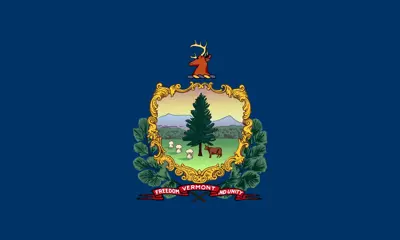
Vermont (/vərˈmɒnt/ (listen)) is a state in the New England region of the United States. It borders the states of Massachusetts to the south, New Hampshire to the east, and New York to the west, and the Canadian province of Quebec to the north. Vermont is the only state in New England that does not border the Atlantic Ocean. Vermont is the second-least-populated U.S. state and the sixth-smallest by area of the 50 U.S. states. The state capital is Montpelier, the least-populous state capital in the United States. The most-populous city, Burlington, is the least-populous city to be the most-populous city in a state.
