Robert Zubrin Quotes
The largest automobile company in the world is Volkswagen. Who owns it? The answer is the government of Qatar.
Zubrin, Robert. Energy Victory: Winning the War on Terror by Breaking Free of Oil. Prometheus Books, 2007.


What Mises says in this quotation is true. What he does not say that by the time the automobile was developed and then the airplane, the Railroad monopoly had impeded and destroyed so many different entities that the governments had cracked down and curtailed much of the ability of the Railroads to exercise monopolist power. If the Railroads had as much power in 1920 as they did in 1870, there probably never would have been a thriving auto industry and the airlines would likely never have succeeded. Mises again exaggerates a basic point that large monopolistic companies and industries often have not been able to stave off new technology and approaches. While true in many cases, the cause is not necessarily fundamental to economics but has sometimes (as with the railroads) been caused by Government regulation and reform. A better example is that the large sail dominated shipping industry was not able to stop the coal fired steam engine ships. Indeed the shipping owners embraced the new technology. The best examples of Mises point occurred after Mises died. For example, Microsoft was not able to prevent Google from dominating many of Microsoft’s positions in the IT world.


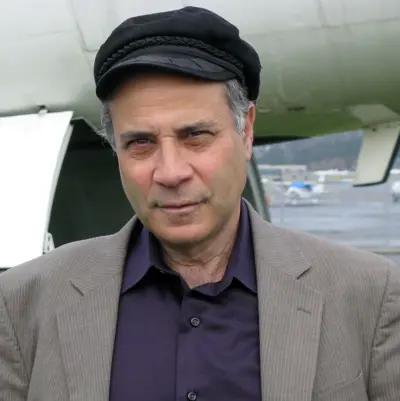
Robert Zubrin is an American aerospace engineer, author, and advocate for human exploration of Mars. He and his colleague at Martin Marietta, David Baker, were the driving force behind Mars Direct, a proposal in a 1990 research paper intended to produce significant reductions in the cost and complexity of such a mission. The key idea was to use the Martian atmosphere to produce oxygen, water, and rocket propellant for the surface stay and return journey. A modified version of the plan was subsequently adopted by NASA as their "design reference mission". He questions the delay and cost-to-benefit ratio of first establishing a base or outpost on an asteroid or another Apollo program-like return to the Moon, as neither would be able to provide all of its own oxygen, water, or energy; these resources are producible on Mars, and he expects people would be there thereafter.
