Robert Lutz Quotes
People who think it doesn't matter who owns our auto industry are flat wrong.


In the Meltdown of 2008, the American Auto Companies were in dire straights and faced bankruptcy with no certainty that the industry could stay alive., They were running out of money and President Obama decided to make loans, take stock and control and force modernizing on the industry. As a result, and with some Toyota mismanagement, the companies returned to profitability and paid back their government loans early and as a result the bailout had not cost the taxpayers any money. Creditors however were outraged that the lost their preferred advantage had their been a bankruptcy.

What Mises says in this quotation is true. What he does not say that by the time the automobile was developed and then the airplane, the Railroad monopoly had impeded and destroyed so many different entities that the governments had cracked down and curtailed much of the ability of the Railroads to exercise monopolist power. If the Railroads had as much power in 1920 as they did in 1870, there probably never would have been a thriving auto industry and the airlines would likely never have succeeded. Mises again exaggerates a basic point that large monopolistic companies and industries often have not been able to stave off new technology and approaches. While true in many cases, the cause is not necessarily fundamental to economics but has sometimes (as with the railroads) been caused by Government regulation and reform. A better example is that the large sail dominated shipping industry was not able to stop the coal fired steam engine ships. Indeed the shipping owners embraced the new technology. The best examples of Mises point occurred after Mises died. For example, Microsoft was not able to prevent Google from dominating many of Microsoft’s positions in the IT world.

The practice worked fine in the Automobile industry, until there was intense competition from imported cars, and price increases were not easy to sustain and keep market share at the same time. When the automobile executives made some bad decisions, there was great conflict with the Unions who argued that it was the management that made the big mistakes and therefore the workers should not have to reduce their remuneration, and the automobile companies were caught in a death spiral where there costs were too high for the cars they made, the quality had slipped in an effort to save costs, and they did not make the smaller, low gas mileage cars that were in demand. The industry would have failed completely had it not been for the George W. Bush and Barack Obama administrations working together to bail out the American auto companies to the distress of many conservative ideologues in and out of Congress. See {637913} for a classic right wing ideological response to bailouts earlier.


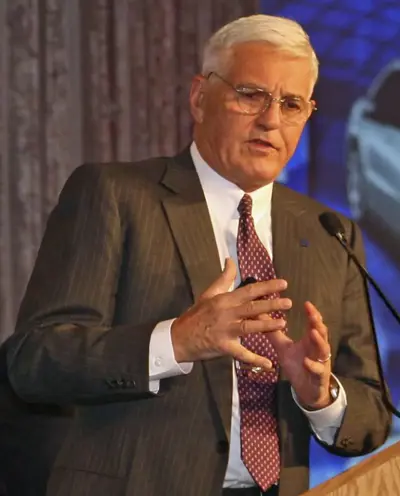
Robert Anthony Lutz is a Swiss American automotive executive. He served as a top leader of all of the United States Big Three (automobile manufacturers), having been in succession executive vice president (and board member) of Ford Motor Company, president and then vice chairman (and board member) of Chrysler Corporation, and vice chairman of General Motors.
