Samuel P. Huntington Quotes
The larger society has to recognize some degree of autonomy for the minority: the right to practice their own religion and way of life and to some extent their language.
Huntington, Samuel P. "Interview by Amina R. Chaudary." Islamica Magazine, no. 19, 2007.


Arguments against the Partition of India at the time centered around the poor economic viability of a separate Muslim state. However Iqbal and others placed the cultural issues in the forefront. They eventually prevailed.


The Canadian Province of Quebec had passed draconian language laws making French the only official language of Quebec, despite the fact that a large proportion of the Quebec Population did not speak French. The language laws not only elevated French to the official language, but made it illegal to conduct any business or public activities in English or any other language. Most of the non French speaking Quebec residents, in Montreal moved to Toronto, and then the major corporations followed them as they could not get enough executives to live in Montreal, one of the great cosmopolitan cities of the world, that was now forced to be monolithically French. The Quebec language police prohibited Orthodox Jewish butchers to have their Hebrew symbols for Kosher food, and other silly things like that. The human rights logic—rather the lack thereof—caused great difficulty. The French, as a minority in Canada, demanded and got the right to have French as an official language in all of Canada. However, the Mohawk Indians, a minority of the population of Quebec, were not allowed to use their own Mohawk language on their store signs and had to have their children educated in French rather than English, despite the fact that English speaking was a major advantage in gaining employment and earning high salaries. The Commission report and this quotation illustrates the huge cultural and intellectual disconnect between the extreme French Culturists and most Americans and Canadians. The Commission observes that there are a number of American states which have English as an “official” language, but there are NONE of them which prohibit a citizen of using any language he wants on the signs in his business or his advertising, or in schools. The Human rights criticism is not that they made French the official language, but that they made illegal any one using any other language in normal activity. The minority French speakers who were the majority in the province of Quebec, then disenfrahchised and discriminated against the English speaking minority as well as other smaller minorities. However, if the majority English speakers of Canada, would do the same, they would be the first to claim discrimination against the minority.

After the WWI Turkish massacre of Armenians and the casualties of WWII, large numbers of Armenians were outside of Armenia which was a part of the Soviet Union and many ethnic Russians were moved into Armenia thus dominating the country. The ethnic Armenians found themselves a minority in their own homeland,

This quotation which appears absurd on the surface given Iran’s terrible record with religious minorities provides insight to Islamic orthodox thought. For the orthodox Muslim, Sharia—Koranic Law—is the basis of the society. God defines the rights of people and their obligations. Whatever rights are provided by Sharia, Khomeini and some others wished to provide them equally to religious minorities also. However, those rights do not include the right to criticize the Islamic law or the leaders who implement it. That would be heresy if done by a Muslim, a Christian, or a Jew. A Christian church may not erect a public cross or ring bells on Sunday. That is prohibited by the Koran and is imposed on all. Bahai religious adherents are tracked down in the Islamic Republic and are often executed. ‘What about their rights?’ they ask. The answer is that the Bahai were Muslims who have become “backsliders” and heretics, and under Sharia, they must be executed for heresy; they are deemed to be heretical Muslims and not members of a minority religion.


Ali was arguing that India should not be a single nation but each major ethnic group should have its own country. Pakistan was later to be separated out. However, the Akhoots, Christians, Dravidians and Sikhs did not have the same desire for separatism as the Muslims and stayed in India, and today India is a pluralistic nation which even includes about the same number of Muslims who have elected to be Indian citizens rather than Pakistani.

The “Proms” have been traditional concerts in England for years. However, there are great differences in the musical taste and preferences of different socioeconomic and cultural subgroups. And many of these groups do not care for the type of music, the overt patriotism or the formality. The issue for England is do they change the traditional public concerts to reflect the tastes of all groups or do they fund different concerts appealing to the different cultures. The one supports unity and the other a type of separatism.

Bourne was one of the first writers with a national audience to question the classic but never real “melting pot” theory of immigration and suggest the “salad” model though he never used the term.


Islam was not very strong at this point and the followers of Muhammad were relatively few and the Medina area contained Arab Non-Believers, Jews as well as the new Muslims. Muhammad drew up this document and got the non Muslims to agree to it. Not only were Jews able to practice their religion freely (as were the non-Muslim Arabs) but there was not tax on the non Muslims that was imposed later when the Muslims were much stronger relative to others. Also, which surprises many Jews and Muslims alike, the Community – the Ulma – the People included the Jews and Arab Non Believers. Today it is only the Muslims.
Most immigration reformers want to open immigration more widely. Ward wanted immigration restricted to certain ethnicities and limited. He wanted a uniformity of assimilation and not diversity.

The Afrikaner’s were the descendants of the Dutch farmers who were the first white immigrants to South Africa. They ended up dominating the political scene of South Africa and other white minorities had little political power. The Blacks and Coloreds (Indians) had none in the Afrikaner Apartheid regime. This was a constant theme of the Afrikaners to the other White minorities that if the Afrikaner Apartheid and control of the Black majority, the other white minorities would suffer, This turned out not to be true however. When the Afrikaners were pushed out of control, Nelson Mandella led the Blacks to a non-vengeful creation of a new state, where most of the white minorities were reasonably happy except for some of the diehard Afrikaner racists. Botha was the political leader of the Afrikaners.

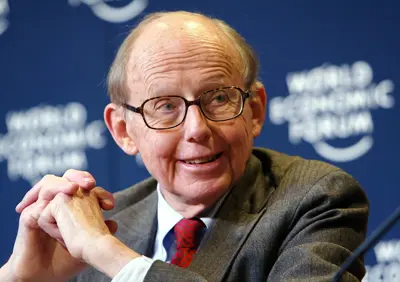
Samuel Phillips Huntington was an American political scientist, adviser and academic. He spent more than half a century at Harvard University, where he was director of Harvard's Center for International Affairs and the Albert J. Weatherhead III University Professor.
