James Anthony Froude Quotes
The landlord may become a direct oppressor. He may care nothing for the people, and have no object but to squeeze the most that he can out of them fairly or unfairly. … In Ireland landlordism was tempered by assassination. Unfortunately the wrong man was generally assassinated. The true criminal was an absentee, and his agent was shot instead of him
James Anthony Froude, 1818–1894, English historian, novelist, philosopher biographer, and editor of Fraser's Magazine, “On the Uses of a Landed Gentry”, Address, Edinburgh, November 6, 1876
Sourced by: Eigen's Political and Historical Quotations


While a view that there is no such thing as society might be a little over the top, one type of classic conservative emphasis the individual above all else.

His voyage took him to several slave countries where his anti-slavery views were challenged by locals.


She had urged that the age of consent be raised from 13 to 18 when one of the Lords responded that it should be LOWERED to 10.

The Diggers were a religious-economic movement that even today would be considered very radical. They advocated the right of the poor to go onto public lands and farm them—thus the name “Diggers.” Beyond their opposition to the private ownership of land to the exclusion of the poor, Winstanley and the Diggers promulgated another very modern doctrine: That the poor should take the responsibility and have the right to determinine how the society should provide for the poor. A version of this became one of the Mottos of the Poverty Program of 1964. See {616966}.


Ingersoll was considered to be the greatest orator and political thinker of his day, but his overt atheistic views curtailed his elected political career.

In 1982 the Penn Square bank collapsed, but the public accountant had given it a clean opinion shortly before.

Executed by the English for his part in the Easter Uprising.


There were few if any consumer protection laws in those days and many wealthy aristocrats made their money by taking advantage of the poor. They were the landowners, bankers, financiers and often the industrialists. Shaw was a sarcastic social critic and this is a typical line he gave his upper class characters. Today, we have more controls on business and finance, and many wealthy business people have gotten that way by providing great value to the consumers and being honest. However, we still have large numbers of wealthy members of society who do make their money from the poor and middle class by unethical and often illegal means. In the aftermath of the Meltdown of 2008. hundreds of thousands of the homes of the working poor and middle class were foreclosed by the major banks forging the legal documentation for the foreclusures. Millions of consumer contracts are issued that even a PhD cannot understand the terms of without special legal and financial training. There is even a legal definition of a salesperson lying to make a sale which is so commonplace that our law excuses it and calls it "puffing". However, there has been over time, improvement over Shaw's era.


The people to be shunned were those who would bid for a property that a tenant had been evicted from for failure to pay rent. The rents would be raised to outrageous amounts for people whose crops had failed in the famine. Finally, the British government institutes rent control even though philosophically opposed to it. See {617607}.
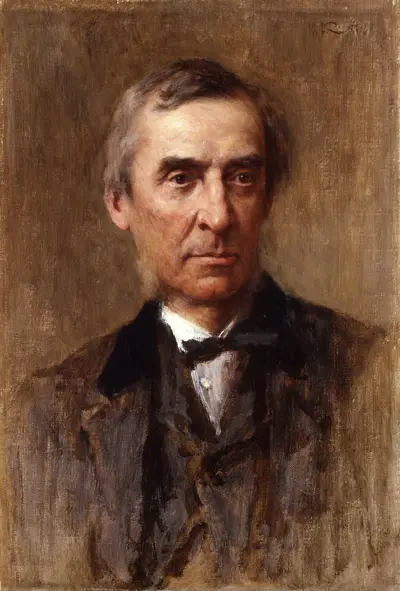
James Anthony Froude FRSE was an English historian, novelist, biographer, and editor of Fraser's Magazine. From his upbringing amidst the Anglo-Catholic Oxford Movement, Froude intended to become a clergyman, but doubts about the doctrines of the Anglican church, published in his scandalous 1849 novel The Nemesis of Faith, drove him to abandon his religious career. Froude turned to writing history, becoming one of the best known historians of his time for his History of England from the Fall of Wolsey to the Defeat of the Spanish Armada. Inspired by Thomas Carlyle, Froude's historical writings were often fiercely polemical, earning him a number of outspoken opponents. Froude continued to be controversial up until his death for his Life of Carlyle, which he published along with personal writings of Thomas and Jane Welsh Carlyle. These publications illuminated Carlyle's often selfish personality, and led to persistent gossip and discussion of the couple's marital problems.
