Charles Stewart Parnell Quotes
Shun the man who bids for a farm from which a tenant has been evicted. Shun him in the street, in the shop, in the marketplace, even in the place of worship, as if he were a leper of old.
The people to be shunned were those who would bid for a property that a tenant had been evicted from for failure to pay rent. The rents would be raised to outrageous amounts for people whose crops had failed in the famine. Finally, the British government institutes rent control even though philosophically opposed to it. See {617607}.
Charles Stewart Parnell, 1846-1891, Irish Member of British Parliament, Founder of the Irish Land League, Leader, Irish Parliamentary Party, Speech at Ennis
Sourced by: Eigen's Political and Historical Quotations

Eleven years later, abuses were so great and things were so bad that Gladstone reversed himself and the Wyndam Act to regulate Irish rents was passed.

Rack-Renting was the term for a Landlord charging the Tenant farmer an exorbitant rent per year for the right to farm and live on the land. Often the rent for a single year would be an amount equal to the fair market value of the purchase of the entire property, but the Landlords would never sell. The tenant farmers rarely had any alternative as that land had their home such as it was and provided their meager living which generally was only slightly more than the Rack Rent. The Irish National Land League was created to reform the land use and allocation system of Ireland.


He had just been released from jail for urging mass demonstrations to prevent tenant farmers from being evicted.


The bulk of Australian taxes were prior to that import and excise taxes. Taxes of individuals and land was late in coming.


In Scotland, large land owners who controlled most of the land discovered that they could earn more money from putting sheep on their lands than they could from rents charged to tenant farmers and simply evicted most of the tenant farmers who had no where to go. New Zealand, as a result of McKensie’s efforts passed laws guaranteeing 999 year leases at reasonable prices to any who wanted to farm.

For his seditious activities he was sentenced to penal servitude for life. He escaped and came to America where he entered politics


What is fascinating about this quotation is that although the head of a religion, Smith was not advocating the kinds of personal lifestyles of his church the way modern religious leaders do, but was concerned with the much larger issues of expansionism, corruption of the courts and judiciary, and land distribution. He was a classic reform candidate in that sense. Smith had written to most of the then likely Presidential candidates of both major parties asking for their position on the Mormons who were facing persecution wherever they went. None of the politicians would make any satisfactory commitments. Smith took Direct Action and became the only major religious official to have run for the Presidency of the United States until Pat Robertson tried and failed in 2000. Smith’s assassination shortly thereafter cut his run for the Presidency short before it made much headway and politically he had no chance to affect the race.

At the time many workers lived in housing owned by their employer. When the Pullman company had a labor dispute, they not only locked the workers out of their jobs but evicted them from their meager housing.
Fixed tenure meant leases for a significant period of time. For various reasons, Irish landowners were reluctant to invest in improving property in any way. It the tenant invested his own sweat or resources to improve the property, the landlord would evict him and rent to someone else for more money for the “improved” property. So no one would ever improve property until there were laws requiring tenants to have rights of transfer, inheritance and reasonable fixed lease terms.

He had been exiled to the United States.

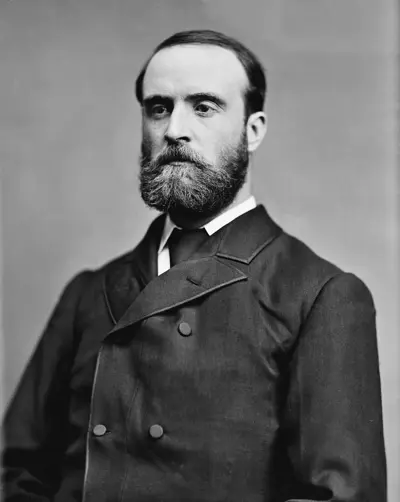
- Born: June 27, 1846
- Died: October 6, 1891
- Nationality: Irish
- Profession: Politician
Charles Stewart Parnell was an Irish nationalist politician who served as a Member of Parliament (MP) from 1875 to 1891, also acting as Leader of the Home Rule League from 1880 to 1882 and then Leader of the Irish Parliamentary Party from 1882 to 1891. His party held the balance of power in the House of Commons during the Home Rule debates of 1885–1886.
