Willy Mutunga Quotes
The Kenyan middle class is scared of any disorder and instability. Its emphasis on peace and unity reflects the protection of its material interests. The Kenyan middle class finds the rule of the compraclor class politically dangerous and based on a very narrow popular base. It sees this compraclor group as endangering this peace and unity. It sees the compraclor group as dominated by a backward and fascist cabal that is unpatriotic. arrogant. insensitive and politically narrow-minded.
Willy Mutunga, Executive Director of the Kenya Human Rights Commission, Chair of the Law Society of Kenya, “Civil Society and the Democratic Experience in Kenya: A Review of Constitution Making from the Middle”, African Sociological Review, 4,(1).2000
Sourced by: Eigen's Political and Historical Quotations


65 years later, this would become a major principle of conservatives, but it was a liberal President who seemed first to make this statement in a major address.


The Grammar Curmudgeon

The Eurozone economy was in recession as part of the Great Recession and nationalist, racist, Islamophobic and xenophobic minority parties were becoming stronger and more popular as a reaction against Muslim militancy and the number of immigrants which, with the exception of the United Kingdom the European people were not used to.


Mussolini and the Fascist majority had already gotten control of the government but their hold was then precarious.
They were very much influenced by the American Declaration of Independence and Tom Paine’s writings. The graphic is one of Rembrandt’s famous painting of a voluntary militia corps.

The public had been roused by the meatpacking scandal and the other exposes of the leading muckraking journalists—of which Baker was one. President Roosevelt had galvanized and led the public opinion to pressure congress and major great reforms were under way that would change America forever—see New York Times editorial {86516}.

Samuel Langhorne Clemens, 1835-1910. This is the earliest written or spoken instance of the “new deal” phrase that we have found in a political context. This was 43 years before President Franklin Delano Roosevelt adopted it as the name of his political program.

The working and middle class wages and other income had been static for over 20 years while the wealthy had theirs increase several fold. The “rising tide” only lifted the largest boats.

Graham was a very strong advocate for democracies. However, many politicians advocated staying out of that struggle. They pointed out that Graham was very inconsistent. He opposed the U. S. taking sides in most of the other struggles between democracies and dictatorships such as in Saudi Arabia, Arab Emirates, Kuwait and the dictatorships of Azerbaijan, Zimbabwe, and Burma among others. Graham was a strong anti-Russian and supported countries who were against Russia or with whom Russia was at odds.

He often spoke in the North to try and explain the virtues of the “New South” with an idea of diminishing the stigma the South has borne every since the founding of the nation. In this particular speech, His audience included J. P. Morgan and H. M. Flagler at New York’s Delmonico's Restaurant at a meeting of the New England Society of New York. He gave a picture of a middle class society, but the reality was there was a very small middle class in the South at that time. Most farmers were tenant farmers and didn’t even own their own land. And the 50 homes for every palace were far below the standard with which the North had become familiar.

The crisis of inequality of income and wealth has occurred seven times in American history.
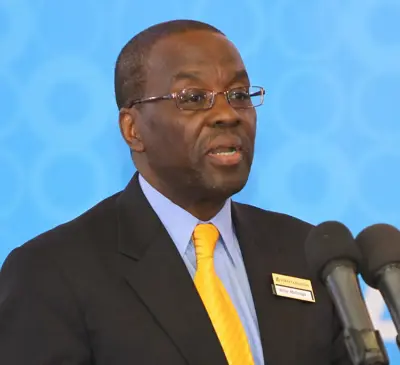
Willy Munyoki Mutunga is a Kenyan lawyer, intellectual, reform activist, and was the Commonwealth Special Envoy to the Maldives. He is also an active member of the Justice Leadership Group. He is the retired Chief Justice of Kenya and President of the Supreme Court of Kenya.
