George F. Kennan Quotes
The jealous and intolerant eye of the Kremlin can distinguish, in the end, only vassals and enemies, and the neighbors of Russian if they do not wish to be one, must reconcile themselves to be the other.
As Ukraine found out in 2014, Vladimir Putin, President of the Russian Federation, had a similar outlook as the Kremlin of the Soviet Union 70 years earlier.
George F. Kennan, 1904-2005, Historian & U.S. Ambassador to Russia and Yugoslavia, 1944
Sourced by: Eigen's Political and Historical Quotations


After the breakup of the Soviet Union, NATO expanded to include some fo the former Soviet Nations thus moving NATO territiry to the East--closer to Russia, whose leaders percieved that the expansion was hostile and dangerous for the indpendence of Russia. What made the situation more complex is that the American Secretary of State, when the Soviet Union was very powerful, had made an agreement with the Soviets that in return for Russian aquiessance of NATO being extended to East Germany, NATO would not expand further West. But after the collapse of the Soviet Union, Russia was quite weak and NATO expanded east despite the earleir comittment. The US and th eother NATO counties took the pozition the previous comitmnts were not binidng as they were never formally signed. The Russians then decided to take a hard line position and flaunt and use military force to which would stop the Western expansion closer to the Russian border.


Prevented by the Military from ever taking office. She was commenting on recent attacks against minority Muslims by the majority Buddhists and one of the major reasons she claimed was the lack of trust in the Muslim community that had developed during the period of military dictatorship.


The FBI was accused of tapping congressional phones and infiltrating college campuses:


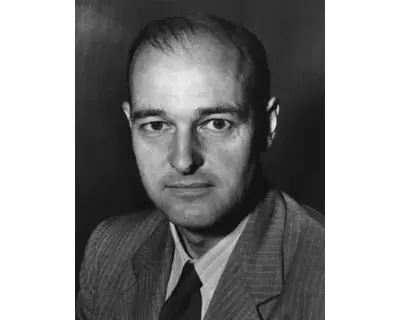
George Frost Kennan was an American diplomat and historian. He was best known as an advocate of a policy of containment of Soviet expansion during the Cold War. He lectured widely and wrote scholarly histories of the relations between the USSR and the United States. He was also one of the group of foreign policy elders known as "The Wise Men".
