Steven Spielberg Quotes
The Japanese had a very strong belief in Bushido, death before dishonour. They were fighting for their country; they were the aggressors in World War II.
"Steven Spielberg Discusses 'The Pacific'." HBO, WarnerMedia, 2010.


His documentation of Bushido—the way of the warrior—has influenced Japanese culture and behavior even into modern times. This statement in large part explained the behavior of Japanese troops in WWII. Surrender was considered cowardice and therefore fighting to the death was required of all Japanese. This particular work was studied by American experts on Japan and the assumption that this was the Japanese cultural imperative for soldier and civilian alike, was one of the major factors leading Truman and America to use the Atomic bomb in WWII for they did not anticipate any Japanese surrender otherwise and an invasion of the Japanese mainland would have killed more Japanese and many Americans as well. Even after the first atomic bomb on Hiroshima, the Japanese would not surrender and it took the Emperor to finally contradict the Japanese culture as stated in Yamamoto Tsunetomo’s writing. See also {586232}.


The Emperor and many Japanese did not want foreign trading missions in the country. (see {613126}.) The problem at the time had nothing to do with the potential economic effects of trade on domestic industry or balance of payments, but for the Japanese was strictly a cultural problem. They were in great fear of what today some call “cultural imperialism”--the adoption of a foreign culture. The Japanese had been so fearful of cultural influence of foreigners that when some Japanese fishermen’s boat had been sunk and they had been rescued by foreign seamen and returned to Japan, they were executed as they had been “contaminated” and could “contaminate” the rest of the population. The government was in disarray ({613125}) and the military did not feel strong enough to take on the foreigners. Jiro was whipping up public opinion. He himself was decapitated by the government and his head exhibited as an example.
This quotation is important because the American public and their leaders saw only one course of action—invasion of the Japanese Mainland. The debate was whether to attempt the invasion right away or bomb and blockade Japan into destruction and starvation weakening the population so their resistance would not produce the kind of casualties that we had experienced with the Invasion of Okinawa. The bombing and blockade strategy was selected and 80 percent of Tokyo was obliterated. Yet the Japanese refused to surrender even after all its manufacturing capability was destroyed and the agriculture was beginning to be destroyed. Most Americans did not realize it but the atomic bomb was being made ready for use. After the test bomb in New Mexico, we had enough fissionable material for 2 bombs and it would take several months for each additional bomb. The use of the atomic bomb at the time seemed not much different from the massive bombing that had already taken place. More Japanese were killed in some of these conventional bombings than with the Atomic Bomb. The key believe was that the Japanese would not give up. After the first A bomb, they still would not surrender, and when the Emperor decided on surrender after the 2nd bomb, there was a military insurrection in the palace to stop the Emperor’s surrender message to the people from being broadcast. It was just minutes too late, and the Emperor had to be obeyed. Invasion, with its terrible casualties—many more than the atomic bombs—was unnecessary.


It is not clear whether their manifesto was written by D’annunzio himself or followers in Fiume the Dictatorial mini-state that he ruled, He was a precursor to the Fascists of Europe and this is the origin of the Fascist glorification of war. Hitler and Mussolini also picked up the dagger as a symbol (see Quotation 643744), the black colored uniforms and the stiff-armed salute from D’annunzio.

The Hapsburgs were the ruling family of the Austrian Empire who wanted to invade Serbia in retaliation for their complicity in the assassination of the Austrian Archduke. This would likely bring Russia in the war in support of Serbia. The editor thought that there was no obligation to support Austria when they were planning a war of choice. What the editor did not know was that the German leadership very much wanted war at the time and supporting Austria was the perfect excuse to fight without them starting the conflict. However, the evidence became clear later than it was German aggression that turned the dispute into a World War.


The note was found in an abandoned Japanese camp on Bataan. There are some who believe that this note was a forgery. However, most think it genuine as it reflected one of the Japanese
“aces in the hole” to defend against an allied invasion of the Japanese mainland. It was one of the reasons that some American planners advocated use of the Atomic Bomb. Of course that was a real risk of using the bomb. The Japanese might be so angry and feel morally abused and kill the many allied prisoners they had. Many thought it was a lesser risk because it did not have the symbolic animus that foreigners occupying the Japanese homeland had. The quotation illustrates the amazing complexity that the American and allied leadership faced trying to end WWII in the Pacific.

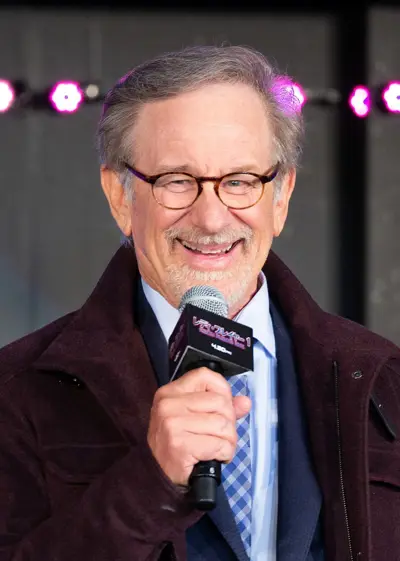
Steven Allan Spielberg is an American film director, producer, and screenwriter. He began his career in the New Hollywood era, and is one of the most commercially successful directors in history. Spielberg is the recipient of various accolades, including two Academy Awards for Best Director, a Kennedy Center honor, and a Cecil B. DeMille Award.
